








Rated 4.9+ stars by
verified, happy customers

Depending on its type, dementia can affect individuals differently. Dealing with this condition can be challenging for the individual and their family.
Understanding different types of dementia can help — whether you’re a senior seeking answers for yourself or a family member offering support. This article explains the different types, early signs and symptoms, and practical care advice to help you feel informed and more at ease from diagnosis through day-to-day coping.
Dementia refers to a group of brain disorders that typically affects elderly people over the age of 65. This syndrome can gradually affect a person’s memory, speech, problem-solving, coordination, language, cognition and ability to do everyday activities over time.
While there are over 100 different forms, the four main types of dementia include:
It is also common to have mixed dementia, which is when you have two or more dementia types. The most prevalent kind of mixed dementia is Alzheimer’s disease with vascular dementia.
There are also many rarer types of dementia, such as normal pressure hydrocephalus, Huntington’s disease, Korsakoff syndrome and primary progressive aphasia.
You or your loved one may notice some of these early signs of dementia:
As dementia progresses, the symptoms can significantly impact your elderly family member’s ability to do daily activities. Symptoms may include:
Everyone experiences dementia differently, and some individuals may not experience all these symptoms.
Upon noticing any potential signs of dementia, it is important for the individual to see a healthcare provider. The doctor will explore the patient’s family history, assess symptoms and get to know the situation better. They may order blood tests, psychiatric exams, brain scans or additional testing to determine the type of dementia and best treatment plan.
While researchers and scientists are still searching for a cure for this condition, there are treatment options for almost all dementia cases to help individuals manage their symptoms. It is also possible to slow the effects of some dementias using medication. Some medications involve chemical messengers to support brain functions, while others target symptoms like depression or sleeplessness.
Understanding the common types of dementia can help you or your loved ones better understand what’s involved in diagnosis, treatment and management.
Over 7 million people in the U.S. have Alzheimer’s disease, which is the most common cause of dementia in seniors. This brain disorder affects many vital brain functions, including memory, thinking, and other cognitive skills.
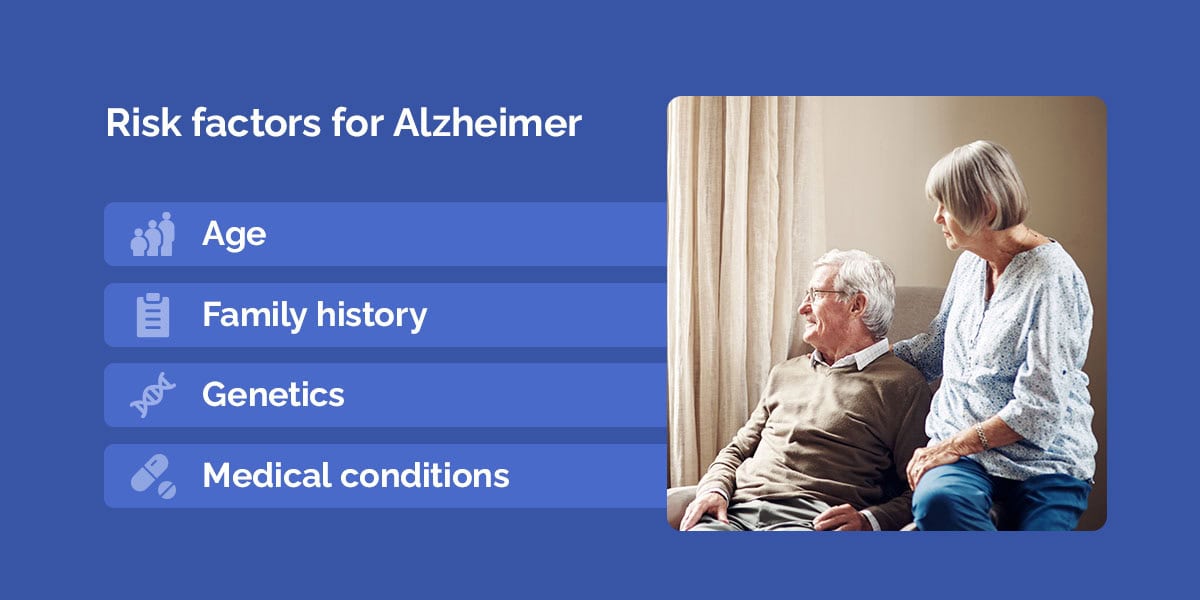
There is a range of risk factors that can contribute to Alzheimer’s disease, such as age, family history, genetics and medical conditions.
Studies suggest the cause is a buildup of the proteins amyloid and tau in and around brain cells. This can result in a decrease in the number of chemical messengers responsible for sending messages within the brain.
Alzheimer’s disease is progressive, meaning its symptoms develop slowly over the years. The most common early sign is memory loss, such as misplacing items or forgetting recent events.
In the later stages, individuals may find it difficult to eat or move around without extra help. A family caregiver can provide them with additional comfort and assistance at this time. This includes ambulation support or preparing texture-modified foods.
Recognizing the early signs of Alzheimer’s can help you or your loved one to prepare to live with the condition more comfortably. Your health provider will run tests to confirm a diagnosis.
There are generally two types of treatment options. The first option can reduce or stabilize the person’s symptoms. The other can help slow the progression of Alzheimer’s for those in the early stages of the disease.
Vascular dementia accounts for 17% to 30% of all cases worldwide. This type of dementia occurs when reduced blood flow to the brain causes strokes or mini-strokes, which impact the health of brain cells. There is a range of risk factors for vascular dementia, including smoking and a lack of exercise.
Like Alzheimer’s, vascular dementia can develop slowly over time. However, it can also begin suddenly.
In the early stages, mild symptoms of vascular dementia range from thinking more slowly to difficulty planning, concentrating and understanding.
Any later symptoms may vary depending on which part of the brain is affected. You or your loved one may experience significantly slower thinking, feelings of confusion, disorientation or incontinence.
Catching vascular dementia in its earlier stages is important. The right treatment options can significantly slow the condition’s progress.
Lifestyle changes like stopping smoking, losing weight, or eating a healthier diet can help reduce the risk of damage to blood vessels in your brain.
Medicines can also help by targeting various risk factors, from high blood pressure to high cholesterol or diabetes.
Affecting 1.4 million Americans, Lewy body dementia (LBD) is a progressive brain disease in which protein clumps (called Lewy bodies) form inside brain cells.
This brain condition is progressive and develops slowly over time. It is the second most common type of dementia after Alzheimer’s Disease, and there are two forms — dementia with Lewy bodies and Parkinson’s disease dementia (PDD).
Parkinson’s disease dementia usually occurs in the later stages of Parkinson’s disease (PD). The protein responsible for PD can cause dementia, forming the aforementioned sticky clumps or Lewy bodies. The key difference between PDD and Lewy Body Dementia is that patients with PDD experience cognitive decline after a year or more of movement-related symptoms.
Symptoms of Lewy body dementia include seeing and hearing things that aren’t there, and it can also affect the autonomic nervous system, causing sudden drops in blood pressure and loss of bladder control. There can also be signs of Parkinson’s disease, which affects movement and causes muscle rigidity.
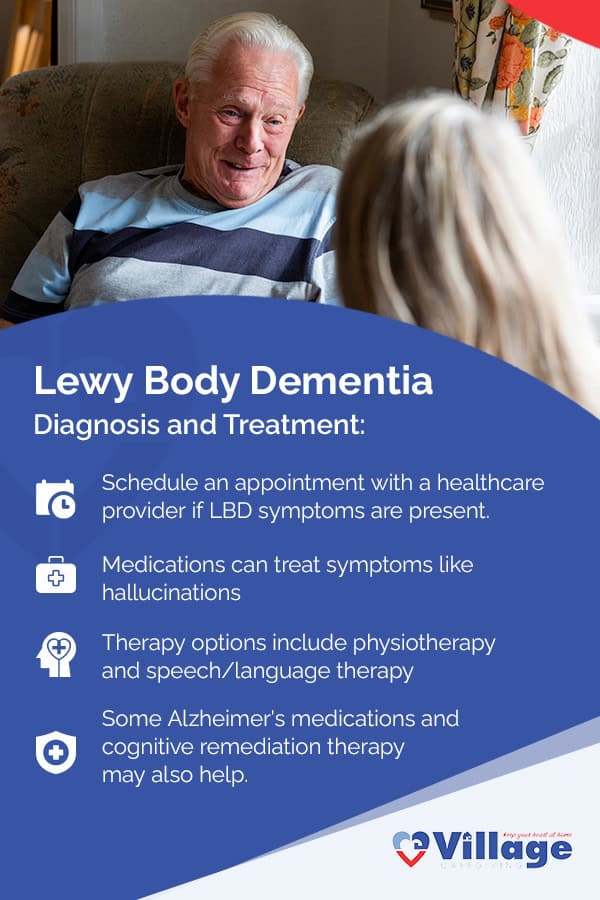
If you or your loved one experiences common Lewy body dementia symptoms, it is important to schedule an appointment with a healthcare provider.
There are no treatments currently available to cure or halt the progression of LBD. However, you can get medication to treat symptoms like hallucinations. There are also various therapy options to support your loved one, from physiotherapy to speech and language therapy.
Some Alzheimer’s medications can also have benefits for PD patients. Therapy options like cognitive remediation can also help as dementia progresses.
Frontotemporal dementia (FTD) tends to be rarer in older patients over 65 and is a subgroup of frontotemporal lobar degeneration.
It affects the front and temporal lobes at the front and sides of the brain, which are responsible for language, behavior, and personality. These lobes shrink or atrophy and cause symptoms depending on what parts of the brain are affected, which can vary from patient to patient.
The exact cause and risk factors are largely unknown, except that having a previous family history of dementia is linked to developing FTD.
This type of dementia typically affects an individual’s behavior and language. They may act inappropriately in social situations or struggle with getting words in the correct order, for example.
Any memory issues associated with FTD tend to come later on, which differs from other types of dementia.
There are various standard tests your doctor can use to help diagnose FTD or another form of dementia. In terms of treatment, there are medications to help with the behavioral issues, such as antidepressants to control inhibitions, as well as a range of therapies to help with the activities of everyday life.
Some of the rarest types of dementia affect one person in a million a year worldwide, as in the case of Creutzfeldt-Jakob disease. The following forms of dementia are rarer than the four most common kinds of dementia.
This brain condition has three variants that affect speech and language differently. It can affect naming objects, pronouncing words, or finding the right words.
An individual’s memory may be unaffected in the first two years of the condition. In the final stages of primary progressive aphasia, you or your loved one may lose the ability to speak or write entirely, but this can take up to 15 years.
The condition does not improve, but can be managed with speech therapy and finding other ways to communicate. You can develop this form of compassionate communication with the individual and use professional family caregivers to continue practicing communication skills.
Caused by excessive amounts of cerebrospinal fluid, normal pressure hydrocephalus (NPH) can lead to extra fluid and pressure in the brain, causing damage. The symptoms can be similar to Alzheimer’s disease or Parkinson’s disease. It usually affects seniors. The most common signs include having trouble walking and balancing, as well as changes in mood, or it can affect bladder control.
This is one of the few types of dementia that you can control or even reverse with a treatment that involves shunt insertion. This procedure involves surgically implanting a tube to drain excess cerebrospinal fluid from the brain, relieving pressure and improving many NPH symptoms.
Dementia can progress in three main stages. In the early phases, you or your loved one may still be able to function independently while noticing some of the symptoms. As an elderly person’s dementia progresses from the middle to late stage, they will need increasing levels of support.
In the early stage after a diagnosis, both people living with dementia and family members can take helpful steps:
As symptoms become more noticeable, many daily activities are still possible with added support. Together, you might:
In the late stage, needs typically increase and 24-hour support may be required. Care may include:
Whether you’re living with dementia or supporting someone who is, aim to center care on the person’s preferences, comfort and dignity at every stage.
An important consideration for any stage of dementia is to remain positive, understanding and flexible. Dementia can take your family on a journey, and it is important to remember that grief may be part of that. Support is essential for both the individual with the diagnosis and those who love them.
Dementia affects people differently, so an individual’s needs can change over time. Whether you’re living with dementia yourself or supporting someone you love, care often evolves, from staying independent with a bit of backup to needing more hands-on help. At any stage, a professional family caregiver can provide basic home care, safety-minded support and trusted companionship — while giving family members time to rest.
At Village Caregiving, we bring over 11 years of experience, including Alzheimer’s and dementia care, to help you or your loved one live comfortably at home. Choose the level of support that fits you — hourly visits, respite or 24/7 care, with flexible scheduling shaped around your routines and priorities.
Find your nearest location today or contact us to create a personalized care plan for you or your family member.