





Rated 4.9+ stars by
verified, happy customers

Heart attacks can be powerful, life-altering experiences, especially for seniors. The severity of the heart attack will impact seniors differently and will dictate how you look after your loved one. It may take from two weeks to three months to fully recover, depending on your relative’s health. Thankfully, there are many tips for caring for the elderly after a heart attack that will make life more comfortable for your family member.
Post-heart attack care for seniors starts before you leave the hospital. At discharge, it is important to keep a list of all the vital information your loved one may need to remember. Use this list to help your family member:
Make sure someone is around to look after your loved one when they first get home and for the long term. This may be yourself, other family members, or even outside help from professional family caregivers. If possible, check your senior’s home is secure, accessible and comfortable so they can rest easily and look after themselves. This may involve tidying up any clutter or making alterations in the home, like grab rails and night lights, to support ambulation.
As your senior family member recovers, you or family caregivers can support them in many ways, from helping them with their mental well-being to getting the chores done.
While a heart attack is a physical condition, it can have an impact on mental well-being, too. One-fourth of heart disease patients experience depression or the “cardiac blues” as a result of the trauma and the resulting impact on their daily lives. You or family caregivers can keep your senior company as they adjust to changes to their daily activities. Having someone to talk to and share feelings with is essential for supporting your loved one’s mental health.
One of the ways you can support your senior’s mental health is by helping them get back into their hobbies. Keeping the mind and body active helps boost dopamine and keep your family member mentally stimulated, even if they have to rest more. It may be helpful to assist your loved one in adapting their hobbies to suit their recovery plan. In the initial recovery stages, your loved one may need to limit exercise, so if they enjoy gardening, you could help them choose more manageable tasks to start on and encourage them to pace themselves with plenty of rest breaks.
Supporting your loved one in enjoying healthy food and nutrition is key to their recovery after a heart attack. A balanced, nutritious diet has numerous benefits for senior heart health and overall well-being. Here are a few areas to focus on:
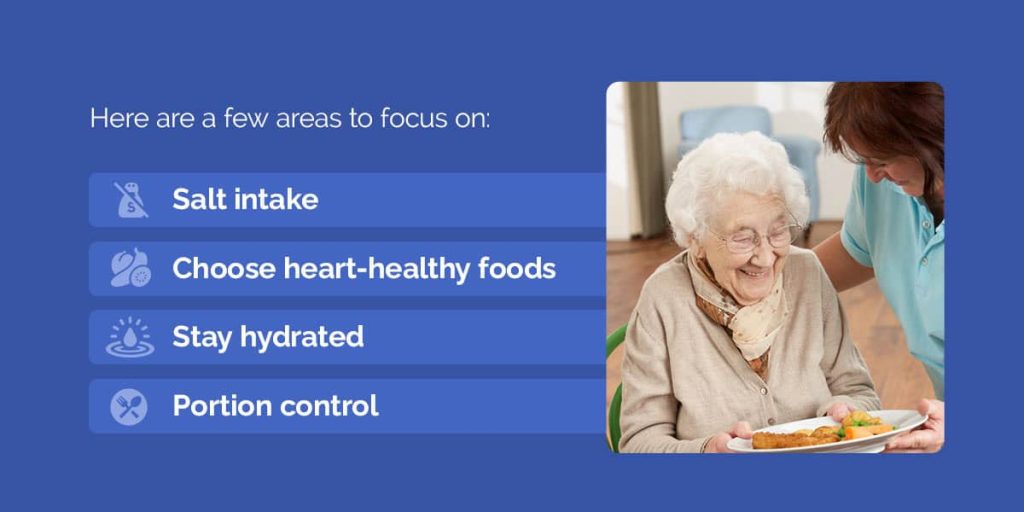
You or your family caregiver could regularly prepare meals for your family member or make the grocery run to entail that they have everything to eat and drink well.
Your loved one may need support following your doctor’s guidance on medication and lifestyle changes, such as stopping smoking.
Medications such as antiplatelets, beta-blockers and statins can help prevent future clots, improve heart performance or lower cholesterol. Your senior family members can keep up with their prescriptions by organizing pill boxes and setting reminders on their phones, calendars, or personal assistants. A family caregiver can help by picking up their prescriptions for them.
Listen to your healthcare provider about any signs or symptoms you or your family caregiver needs to look out for. Call 911 if you suspect a heart attack.
Organize transport to take your loved ones to checkups and any rehab sessions.
Seniors should gradually increase their activity levels. Reassure them that they can take things at their own pace. In the meantime, they may need support with the activities of daily living (ADLs) such as:
Your senior family member may also need extra help with instrumental ADLs, like:

While heart attacks can be life-changing experiences for your elderly loved ones, you can help them recover with the right support. In the initial recovery period, there can be a lot of changes for you and your family members to adapt to. Keeping on top of medications, preparing healthy meals and doing the housework can be a lot of extra work. Working with a trusted family caregiving service makes sure your loved one gets the bespoke care they need, even when you’re not around.
Village Caregiving offers you personalized in-home care for your loved one so you can make them as comfortable as possible throughout their recovery. Our trained family caregivers can help with many daily activities, from companionship to laundry. Since 2013, we have grown from one to over 65 locations across the Midwest and Eastern United States. Call your nearest office to speak with a consultant to get started.