
As your loved ones grow older, their everyday routines can become more challenging, and what was once a safe home may instead become a high-risk environment.
Although many seniors consider moving to nursing homes or retirement communities, 75% of Americans aged 50 and older want to remain in their homes and age in place. If you have a senior individual in your life who wants to age in place, there are steps you can take to make sure they are safe and protected.
This comprehensive guide from Village Caregiving explores everything you need to know about senior home safety, including solutions for aging in place with confidence.
What Are the Benefits of Aging in Place?
Aging in place is about more than avoiding moving logistics. When seniors are supported in aging at home, they can enjoy countless benefits that they may not encounter in alternative housing facilities.
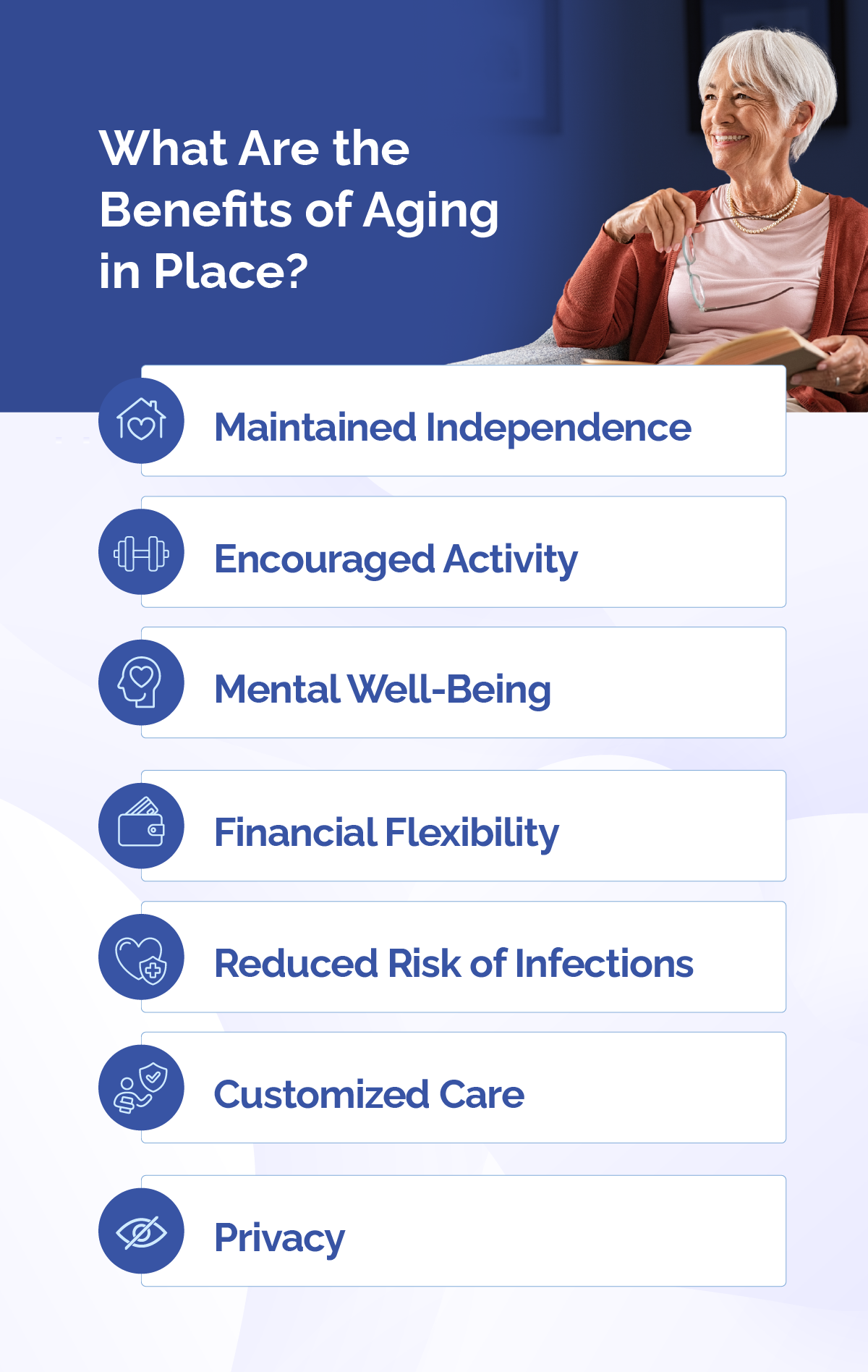
Maintained Independence
Aging in place helps seniors maintain a sense of independence. By remaining in their own home, in a familiar environment, your loved ones can enjoy more autonomy than if they were to move to a communal residence or care facility.
Although some senior individuals require assistance with day-to-day activities, aging in place enables them to make more of their own choices. From the time they wake up to what they choose to watch on their own television, your loved one can continue to feel in control of their life when aging in place.
Encouraged Activity
For seniors who can live independently or semi-independently at home, maintaining an active lifestyle can be easier. An active lifestyle offers seniors numerous benefits, including improved mobility and mental well-being.
Aging in place can encourage activity by helping seniors to:
- Retain purpose: When living at home, seniors can continue to take responsibility for daily activities that give them purpose, such as household chores and self-care.
- Navigate a familiar setting: Senior individuals — particularly those who struggle with mobility — are more likely to be able to move around their home than an unfamiliar environment, such as a nursing home. Navigating a familiar environment is also safer, as individuals are aware of their surroundings and existing hazards.
- Host friends and family: Aging in place encourages social activity for seniors by enabling them to host friends, family and community members in their home.
Mental Well-Being
Aging in place has numerous benefits for seniors’ mental health and emotional well-being, including:
- Stability and sense of belonging: Staying in their homes allows seniors to age in a familiar environment where they feel comfortable. Around 60% of older adults claim to feel safer in their home compared to other living facilities.
- Maintained social connections: When seniors age in place, they can avoid completely uprooting and facing the challenges of building a community from scratch. Aging in place enables seniors to maintain their social connections in their neighborhood and local communities.
- Continued routines: When seniors move to nursing homes or specialized housing, their daily rituals and routines are interrupted. When seniors age in place, they can continue their routines, which include seeing their own health care providers, using their familiar amenities and making their own decisions.
Financial Flexibility
Compared to the other available options, such as nursing homes and retirement communities, aging in place is a more affordable choice for seniors. Even when the costs of at-home care are considered, living at home can provide seniors and their caregivers with unparalleled financial security and flexibility.
It is important to note that the cost of aging in place varies depending on multiple factors, including:
- Location
- Individual care requirements
- Necessary home modifications
- Required level of at-home care
- Unexpected costs
- Transportation and mobility requirements
Reduced Risk of Infections
Particularly for those with compromised immune systems or certain health conditions, living in a communal home can increase their risk of becoming ill.
By aging at home instead of moving to a multi-resident nursing home, seniors can benefit from reduced exposure to diseases or hospital-acquired infections transmitted by others.
Customized Care
Seniors who live at home can personalize their care to their unique needs. Customized care options for seniors living at home include:
- Home modifications: You can improve your senior family member’s quality of life by making personalized modifications to their home. From stair lifts to bathroom handrails, you can adjust a home to meet their evolving needs.
- In-home caregivers: While seniors in care facilities share the support of staff members with other residents, seniors who age in place can choose or be assigned in-home caregivers with experience dealing with their unique challenges.
- Meal preparation: Instead of relying on the nursing home staff to choose their meals, seniors who age in place have more control over their nutrition. From hiring tailored meal preparation services to cooking for your loved one yourself, you can cater to your family member’s preferences and dietary requirements.
- Health care: Every individual faces unique health challenges. When your loved one ages in place, you can tailor their health support to their needs. For example, if your senior family member takes medication, you can organize medication reminders. Similarly, if they struggle with mobility, you can hire in-home caregivers to provide support with strenuous or high-risk activities, such as bathing.
Privacy
When seniors age at home, they can benefit from enhanced privacy and dignity.
Placing your senior loved one in a multi-resident care home can limit their privacy. Besides having to deal with round-the-clock interactions with staff members, seniors in care homes must also interact with other residents and their visitors.
Seniors who age in the comfort of their own homes can enjoy solitude and be in control of their privacy and socializing hours.
What Are the Common Risks for Seniors Living at Home?
Although there are many benefits to aging in place, it can be hard to ensure our senior loved ones are safe at all times.
Whether your loved one suffers from cognitive challenges, health issues or mobility restrictions, there are many risks associated with living at home as a senior, including:
- Falling
- Injury
- Medication errors
- Social isolation
- Malnutrition and dehydration
- Poor hygiene
- Mental health challenges
- Fires
- Wandering
- Overlooked illness
- Scams
- Delayed emergency response
Tips for Senior Home Safety
There are precautions you can take as the primary caregiver or loved one to help a senior live at home safely. From managing hazards to streamlining their emergency protocols, explore our top tips for senior home safety.
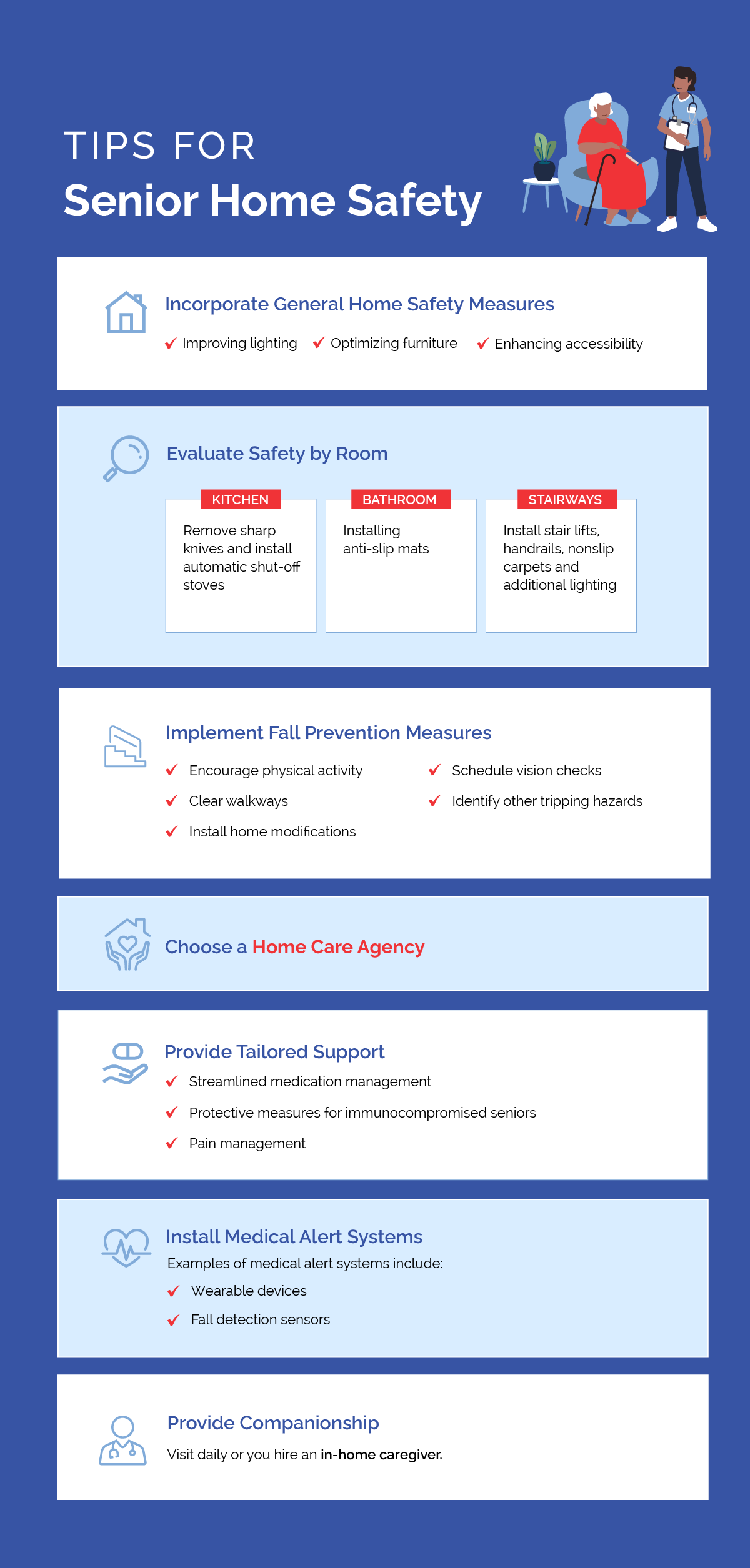
Incorporate General Home Safety Measures
Although our homes are where many of us feel most safe, houses are filled with hazards that might injure or cause harm to senior individuals.
To maximize the safety of your vulnerable loved ones, take steps to enhance the safety of their home. General home safety tips include:
- Improving lighting: Your senior loved one’s home should be equipped with adequate lighting to help them navigate the house safely and confidently. You can improve home lighting by using brighter bulbs, installing motion-sensor lights and adding extra lighting to high-risk areas, such as bathrooms and stairways.
- Optimizing furniture: Choose furniture that is easy to get in and out of for older individuals who struggle with mobility or strength. For example, you can order customized beds that are lower than regular beds to minimize the risk of injury when getting in and out of bed.
- Enhancing accessibility: Some areas of our homes may be easily accessible to us, but they can be challenging to use for seniors. For example, many senior individuals living at home can struggle to access their tub or shower. You can install accessibility features like ramps, handrails and grab bars to make their daily routines easier.
Evaluate Safety by Room
Every room in a house poses its own threats. One approach to home safety is to evaluate a home room by room.
Safety considerations by room include:
- Kitchen: You can customize a kitchen to suit the needs of your loved one by eliminating hazards. For example, you can remove sharp knives and install automatic shut-off stoves to prevent injury and burns.
- Bathroom: Bathrooms are high-risk areas for slips and falls. Consider installing anti-slip mats, handrails and grab bars to enhance bathroom safety.
- Stairways: To reduce the risk of falls, you can install stair lifts, handrails, nonslip carpets and additional lighting for stairways.
Implement Fall Prevention Measures
Falls are the leading cause of injury among seniors, with over 25% of people over the age of 65 reporting a fall each year.
There are various steps you can take to minimize the risk of falling for your senior loved one at home:
- Encourage physical activity: For some seniors, encouraging light workouts and balance-improving exercises can help reduce their risk of falling at home.
- Clear walkways: Clear all walkways of clutter and tripping hazards to help seniors navigate their home safely.
- Install home modifications: You can modify your loved one’s home to make it a safer environment for them by adding handrails, ramps, chair lifts, anti-slip mats and other safety equipment.
- Schedule vision checks: Sometimes, people are more likely to fall if their vision is compromised, as they cannot identify tripping hazards or room boundaries. Schedule regular vision checks to ensure your loved one’s eyesight is adequate for aging in place.
- Identify other tripping hazards: Frayed carpets, loose floorboards and uneven flooring are just a few examples of possible tripping hazards in the home. If you choose to support your senior loved one in aging at home, ensure all tripping hazards are identified and eliminated.
Choose a Home Care Agency
For many people, looking after their senior loved ones can become a full-time job. For those without the capacity to support their senior family members as much as they need, collaborating with a home care agency can be a saving grace.
Some home care agencies offer personalized care plans, specifically designed to improve the safety and quality of life of seniors aging in place. Services from home care agencies include:
- Grocery shopping
- Mobility and ambulatory care
- Housekeeping
- Hygiene assistance
- Laundry
- Cooking and eating assistance
- Companionship
Provide Tailored Support
Depending on their needs, your loved one may require unique support from you and their other caregivers.
For example, seniors with dementia may need support with remembering tasks or locating emergency devices, while those with limited hearing may require visual aids to stay safe.
Examples of tailored support include:
- Streamlined medication management: Whether seniors suffer from cognitive issues or memory loss, mismanaged medication can cause serious health issues. To help your loved one take the correct dosages of their medication at the right times, you can use pill organizers and reminder systems, such as mobile apps that notify caregivers of dosage times.
- Protective measures for immunocompromised seniors: Immunocompromised seniors may require additional support, such as higher household temperatures or specific dietary requirements.
- Pain management: For seniors with chronic pain, it is essential to understand how to manage their condition at home safely and effectively. This can involve duties such as physical health monitoring, transportation to medical appointments and providing a well-balanced diet.
Install Medical Alert Systems
In emergencies, it can be hard for seniors who live alone to request immediate medical attention.
Medical alert systems are a type of smart home technology that enhances senior safety. They can streamline the notification process and automatically inform emergency responders of an accident. Examples of medical alert systems include:
- Wearable devices: Some medical alert buttons can be worn on pendants or watches, so individuals can alert emergency responders even if they cannot reach a phone.
- Fall detection sensors: You can equip your loved one’s home with fall detection systems that automatically alert responders in the event of a fall.
Provide Companionship
Although there are many threats to a senior’s physical safety, aging in place can also lead to mental challenges, particularly for those living alone. These can include social isolation, depression and anxiety.
One of the most effective ways to combat this challenge is to provide them with companionship. Whether you and other family members visit daily or you hire an in-home caregiver, your senior loved ones can significantly benefit from human interaction.
Help Your Loved One Age in Place Safely
There are many benefits to aging in place, but without the proper safety protocols, living at home can put your loved one at risk.
If you want to help your senior family member or friend enjoy enhanced independence, customized care and privacy, consider implementing solutions to help them live safely at home.
Recent Comments