









Rated 4.9+ stars by
verified, happy customers

Medications play a vital role in our health. Some might prevent or treat diseases, while others may enhance your overall quality of life. However, they can also come with side effects. While not everyone experiences them, unwanted symptoms or reactions can arise, especially if you take multiple medications.
While you shouldn’t completely rule out a medication, you don’t have to accept unpleasant reactions without question, either. In this article, we’ll discuss common medication side effects and interactions and what to do if you experience them. With these resources and help from your health care provider, you can better manage your medications and safeguard your health.
Any of the following signs or symptoms could result from medication:
Always contact a healthcare professional if you have questions or concerns about your medication plan. You can also contact your local pharmacist to learn how various medications interact.
Medication side effects, drug interactions and allergic reactions can all lead to unwanted symptoms.
Understanding medications and their side effects can help you prepare for these symptoms or better understand them. Some drugs, like allergy medications, can’t help but trigger side effects due to their chemical structure. The most common side effects caused by medicines are nausea, constipation, dry mouth, drowsiness, rash and headache.
Some side effects might only show up when a drug is combined with others, called a drug interaction. Medication interactions and their consequences can be serious, such as drinking alcohol while taking narcotic painkillers, which can lead to an accidental overdose. If you take a blood thinner, combining it with an anti-inflammatory medicine like ibuprofen can increase your risk of bleeding.
Allergic reactions to medications can manifest in various ways, from mild symptoms like itching and rashes to severe, life-threatening anaphylaxis, which causes difficulty breathing and swelling of the throat. Recognizing these symptoms is crucial — if any severe reactions occur, seek immediate medical attention by calling emergency services or going to the nearest hospital.
Medication dependence can lead to serious risks. It often occurs when you take too much of a medication or take it regularly for a long time. It can cause your body to develop a tolerance to a drug, causing withdrawal symptoms when you stop taking it and a higher risk of overdose. If you feel like overmedication or dependence is causing your symptoms, reach out to a health care professional. They can help safely manage and monitor your symptoms.
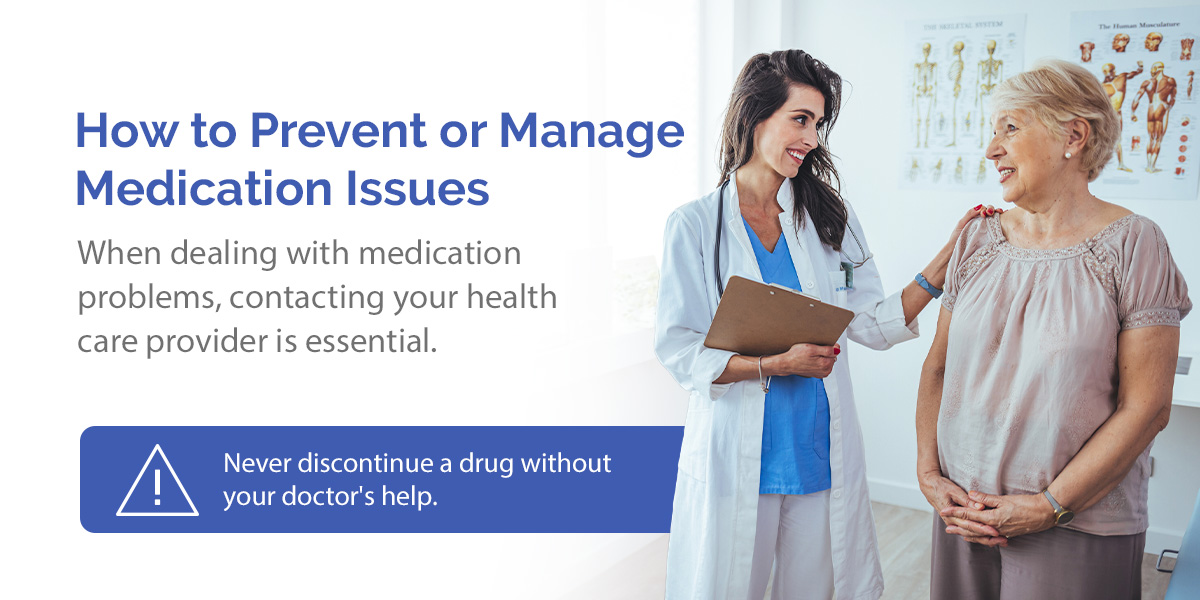
When dealing with medication problems, contacting your health care provider is essential. Never discontinue a drug without your doctor’s help, as this could lead to adverse effects. Here are some tips for addressing health issues from medication:
Avoiding medication-related health issues starts with improving health care provider and patient communication. Health professionals can help you learn which side effects are serious, which ones will go away on their own and which can be prevented.
Some side effects might dissipate as your body gets used to the new medication, and your doctor might recommend that you stick with the plan longer. For example, they might recommend taking the drug with food to avoid nausea and not taking the drug with other medications. In other cases, you might be able to lower your dose, try a different drug or add another one, such as an anti-nausea medicine, to your routine.
When your doctor prescribes a new medicine, ask about common side effects. You should also read the pharmacy label on the prescription bottle or have a family member read it to you to understand the possible side effects. If you experience any unexpected symptoms, reach out to your doctor or pharmacist as soon as possible.
When medications are not taken correctly, they can impact a person’s well-being. It’s vital that you schedule a medication review at least once a year or anytime you change your prescriptions. Doctors can help identify potential drug interactions, adjust dosages and provide an effective treatment plan.
When consulting your doctor, make sure you provide a complete list of all medications and supplements you’re taking, including prescription and over-the-counter drugs. This is especially important for older adults who might be on multiple prescriptions, as drug interactions can lead to adverse effects. New symptoms can be side effects of a drug, so giving your health care provider this crucial information can help you avoid misdiagnosis or unnecessary treatments.
Lifestyle factors can influence medication side effects, so ask your doctor if there are any changes you could make to help with symptoms. This could be as simple as avoiding certain foods or alcohol to mitigate reactions. If you’re experiencing weight gain from an antidepressant, reassessing your diet and exercise routine could be beneficial.
Multiple prescriptions increase the risk of interactions. To help you manage them, keep accurate contact information for health care providers. That way, you can quickly access professional advice and emergency responses. You might also consider using a single pharmacy for multiple medications and let your pharmacist know all the drugs you take. Review your medications to make sure you’re not taking two medications for the same condition, and regularly update your list, including dosages and prescribing doctors.

Village Caregiving provides personalized in-home assistance with daily routines, companionship, meal preparation, and more.
Find Care Near You
Some medication side effects can make self-care more difficult for aging adults, from bathing and toileting to eating and dressing. If you’re facing these issues, consider additional help from a family caregiver who can assist you with ADLs, provide medication reminders and even drive you to and from appointments.
Consider the importance of each medication you take. If certain medicines cause dizziness or another serious risk, it might be time for a change — especially for older adults with a high fall risk. It may take trial and error, but you’ll often be able to find a medicine that works without impacting your quality of life.
If you have concerns about your medications, don’t hesitate to seek professional medical advice. Open communication with your health care provider ensures you get the best care possible. Collaborating with family caregivers can also enhance medication management, especially if you take multiple prescriptions.
At Village Caregiving, we are dedicated to helping older adults lead fulfilling, dignified and joyful lives. We’ll create a personalized home care plan for you, whether you need help with medication reminders or assistance with other daily activities.
To learn more about our services and how we can support you, contact us today or find a Village Caregiving location close to you.
Ready to Give Your Loved One the Care They Deserve?
Village Caregiving builds personalized home care plans — from meal support to companionship — so your family can feel confident every step of the way.