According to the Centers for Disease Control and Prevention (CDC), stroke is a leading cause of death for Americans and a major cause of serious disability for adults. Rapid loss of brain function occurs each minute that a stroke goes untreated. However, fear does not have to be the dominant emotion. Knowledge is the antidote to anxiety.
You can transform from a worried observer into a prepared advocate by learning the early signs of stroke and how professional home care can act as a frontline defense in prevention and recovery.
What Happens in the Brain During a Stroke?
A stroke occurs when blood flow to the brain is reduced or blocked, preventing essential oxygen and nutrients from getting to the brain tissue. Brain cells are incredibly demanding — they require a constant stream of oxygen to function. When that stream is cut off, brain cells start to die rapidly. This decline doesn’t happen gradually. The longer blood flow is restricted, the more damage occurs to the brain. Up to 2 million brain cells die per minute.
The area of the brain affected determines the specific abilities that are lost or impaired. A stroke in the left hemisphere might affect speech and language, while a stroke in the brain stem could affect breathing and consciousness.
Learning how to recognize early signs of stroke in elderly people means preserving not just life, but quality of life, including your loved one’s ability to walk, talk and live independently.
Types of Strokes
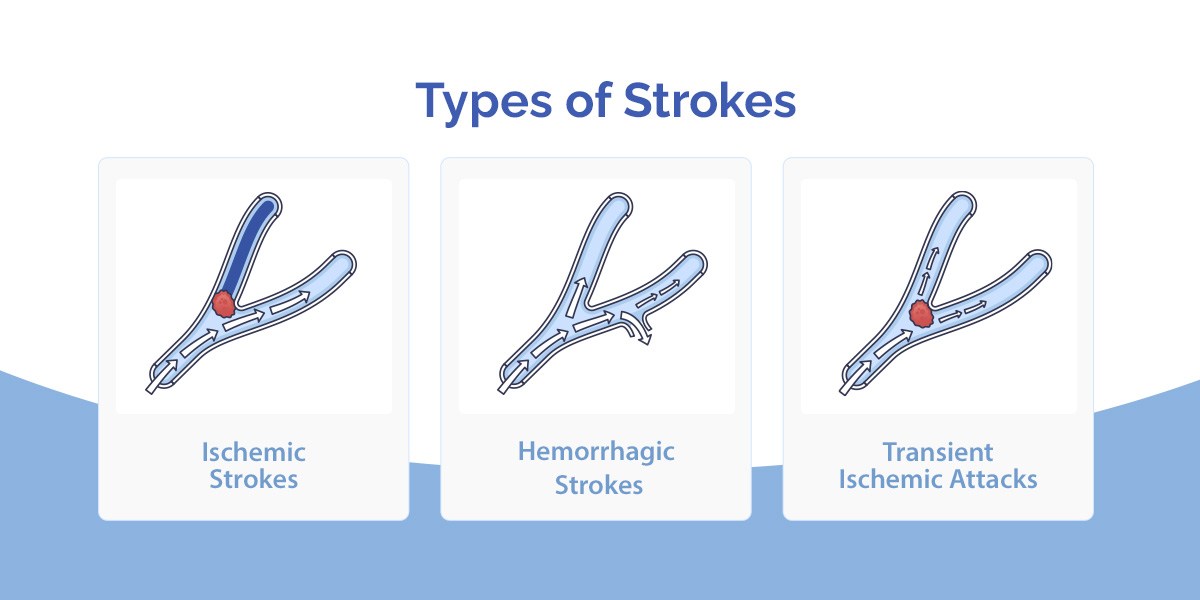
While emergency response is identical for all strokes, the underlying causes differ. Understanding these distinctions can help in identifying risk factors and prevention strategies.
Ischemic Strokes
These are by far the most common, accounting for approximately 87% of all cases. During an ischemic stroke, the blood flow to the arteries to your brain becomes severely narrowed or blocked — a condition known as ischemia. These blockages are often caused by blood clots (thrombosis) or fatty deposits within the arteries.
Hemorrhagic Strokes
These occur when a blood vessel in the brain leaks or ruptures. High blood pressure and overtreatment with blood thinners are common causes. It can also result from severe trauma after falls, car accidents and other incidents. While less common than ischemic strokes, they can be more immediately life-threatening due to the pressure building inside the skull.
Transient Ischemic Attacks (TIAs)
Often called “mini-strokes” or “warning strokes,” TIAs are a temporary period of symptoms similar to those you’d have in a stroke. A TIA doesn’t cause permanent damage and usually lasts less than five minutes. However, it is the most dangerous misunderstanding in stroke care.
TIAs are called warning strokes because they can lead to a full stroke in the future. They are a massive warning sign that indicates a clot has temporarily blocked blood flow. Ignoring a TIA because symptoms have gone away is a critical error. In fact, about 1 in 3 people who have a TIA will eventually have a stroke.
Why Time Is Critical in Stroke Treatment
For stroke victims, the timeline is rigid. The most effective treatment for ischemic strokes, a clot-busting drug known as tPA or tissue plasminogen activator, must generally be administered within three hours of the first symptom. Patients who arrive at the emergency room within this window often have less disability three months after a stroke compared to those who received delayed care.
You may have heard this associated with the emergency medical term “The Golden Hour“, which refers to the 60 minutes following a traumatic injury when there is the highest likelihood that medical treatment will prevent severe brain damage or death. These precious minutes can mean the difference between walking out of the hospital and requiring lifelong nursing care for paralysis. In other words, time lost is brain lost, which is why it’s essential to always seek medical care and avoid waiting around to see if symptoms improve.
The “Be Fast” Framework for Recognizing Stroke
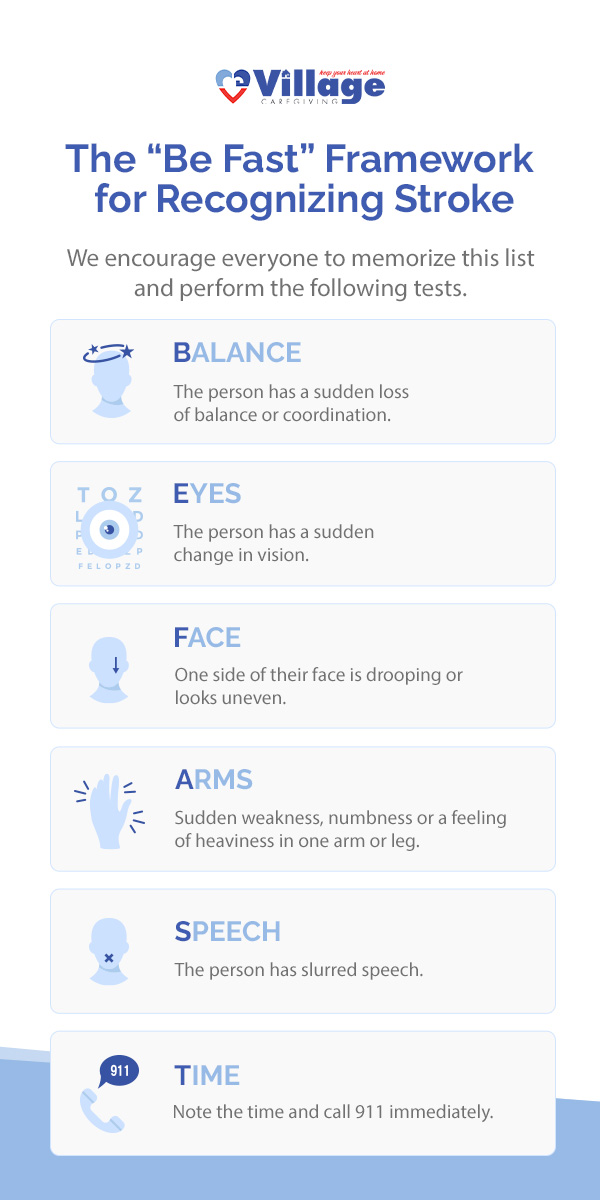
For years, public health campaigns used the acronym “FAST” to help people remember how to identify signs of a stroke. However, this has been updated to “BE FAST” to include some critical early signs involving balance and vision.
We encourage everyone to memorize this list and perform the following tests if you’re unsure if you’re witnessing a sign of a stroke. If so, call 911 immediately.
Balance
The person has a sudden loss of balance or coordination. They are stumbling, leaning to one side or unable to walk in a straight line.
Test: Ask the person to stand up and walk a few steps. Watch for a drift to one side or an inability to keep their feet underneath them. If they complain of suddenly feeling dizzy or like the room is spinning without a clear cause, this falls under the “Balance” warning.
Eyes
The person has a sudden change in vision, including:
- Blurred vision
- Double vision
- Complete loss of sight in one or both eyes
Test: Ask the person if they can see you clearly. Ask them if objects look fuzzy or if they’re seeing two of everything. You can also ask them to cover one eye at a time and report what they see. A sudden blackout or dimming of vision is a major red flag.
Face
One side of their face is drooping or looks uneven. There is numbness in their cheek, lip or one side of the forehead and/or face.
Test: Ask the person to smile. This is the most effective way to spot asymmetry. If one corner of their mouth fails to lift, or if the eyelid on that side seems heavy and droopy, the facial nerve is likely compromised. You can also ask them to stick out their tongue. If it deviates to one side, this could signify a stroke.
Arms
The person has sudden weakness, numbness or a feeling of heaviness in one arm or leg.
Test: Ask the person to raise both arms to shoulder height and hold them there for 10 seconds. Watch closely. If one arm drifts downward involuntarily, or if they’re unable to lift one arm at all, this can be a classic neurological sign of weakness on one side of the body, called hemiparesis. You can also ask them to raise each leg while lying or sitting, then have them push weight against your hands with each leg.
Speech
The person has slurred speech. They are speaking in garbled sentences, unable to find the right words or unable to understand what you are saying.
Test: Ask them to repeat a simple sentence, such as “The sky is blue.” Listen for slurring. You can also ask a question that requires understanding, such as “What is your name, and what year is it?” Confusion or nonsensical speech indicates a cognitive disconnect.
Time
This part of the acronym is not a symptom, but an action. If a person shows any of the above symptoms, even if the symptoms go away, note the time and call 911 immediately. When you arrive at the hospital, the neurologist will ask when the last time the patient was acting normally. If you can give them an exact time, such as “1:30 PM” instead of “sometime after lunch,” it can help determine the treatment options available.
Other Early Stroke Warning Signs
While “BE FAST” covers the majority of stroke presentations, strokes are complex and can manifest differently depending on where the blockage or bleed occurs in the brain. Trust your gut. If your loved one suddenly seems off, do not hesitate to seek help.
Less Common Stroke Symptoms
Keep these less common symptoms in mind:
- Thunderclap headache: A sudden, severe headache that comes on in seconds can be a sign of a hemorrhagic stroke. Your loved one may describe it as the “worst headache of my life.” This is different from a migraine or tension headache — it’s explosive and immediate.
- Nausea and vomiting: Sudden nausea, especially when accompanied by dizziness or other neurological symptoms, can be a sign of a stroke affecting the back of the brain. It’s easy to mistake this for a stomach bug or food poisoning, but if it appears instantly without a dietary cause, be vigilant.
- Sudden confusion: If a loved one suddenly becomes disoriented, forgets where they are or cannot recognize familiar faces, this is a neurological emergency.
Silent Strokes
A silent stroke refers to one that doesn’t outwardly cause obvious symptoms associated with a standard stroke, such as paralysis or speech difficulty. However, they still damage brain tissue. A silent stroke is often discovered incidentally during MRI or CT scans for other conditions. While the term silent implies they are harmless, the damage is cumulative. Multiple silent strokes can lead to vascular dementia and significant cognitive decline. They also dramatically increase the risk of a future major stroke.
What Should You Do if You Suspect Someone Is Having a Stroke?
In the moment of crisis, you or a family caregiver becomes the patient’s greatest asset. It’s important to remain calm. Here’s what to do:
- Call 911 immediately: Tell the 911 operator clearly: “I suspect a stroke.” This triggers specific dispatch protocols.
- Information to provide: Be ready to give the operator the patient’s age, known medical conditions, whether they’re on any blood thinners and the exact time the symptoms started.
- Do not drive the patient to the hospital: Paramedics can begin lifesaving treatment in the ambulance and radio ahead to the hospital. This triggers a “Stroke Code,” ensuring a neurology team is waiting at the door. If you drive, you may get stuck in the hospital lobby. Some areas of the country have mobile stroke units equipped with a CT machine in the ambulance, along with access to a tele-neurologist, allowing for an even more immediate diagnosis.
- While you wait: Unlock your front door and turn on outside lights. Secure any pets to prevent them from obstructing EMS. Keep the patient comfortable and have them lie on their side with their head slightly elevated to promote blood flow and prevent choking if they vomit. Gather their medication list and insurance information to hand to the paramedics.
- What not to do: Do not give the patient food, water or medication, including aspirin. A stroke can paralyze the muscles used for swallowing. Giving them anything by mouth could cause them to choke or aspirate fluid into their lungs, causing pneumonia. Do not let them sleep off the symptoms.
What Happens at the Hospital
Upon arrival, the patient will bypass the standard waiting room. The stroke team will perform a rapid assessment to determine the type of stroke and best course of action. The primary tool during a stroke assessment is a computed tomography (CT) scan of the brain. This happens within minutes of arrival to rule out bleeding caused by a hemorrhagic stroke. An MRI may follow for more detail. Neurologists will also perform a physical examination, including a series of basic tests, to determine the stroke’s severity using a tool called the National Institutes of Health Stroke Scale (NIHSS).
The NIHSS is a 15-item tool used to screen for the severity of a stroke. It includes tests that check for balance issues, facial droops, speech and cognitive impairments and more. The score ranges from 0-42, 42 being the most severe.
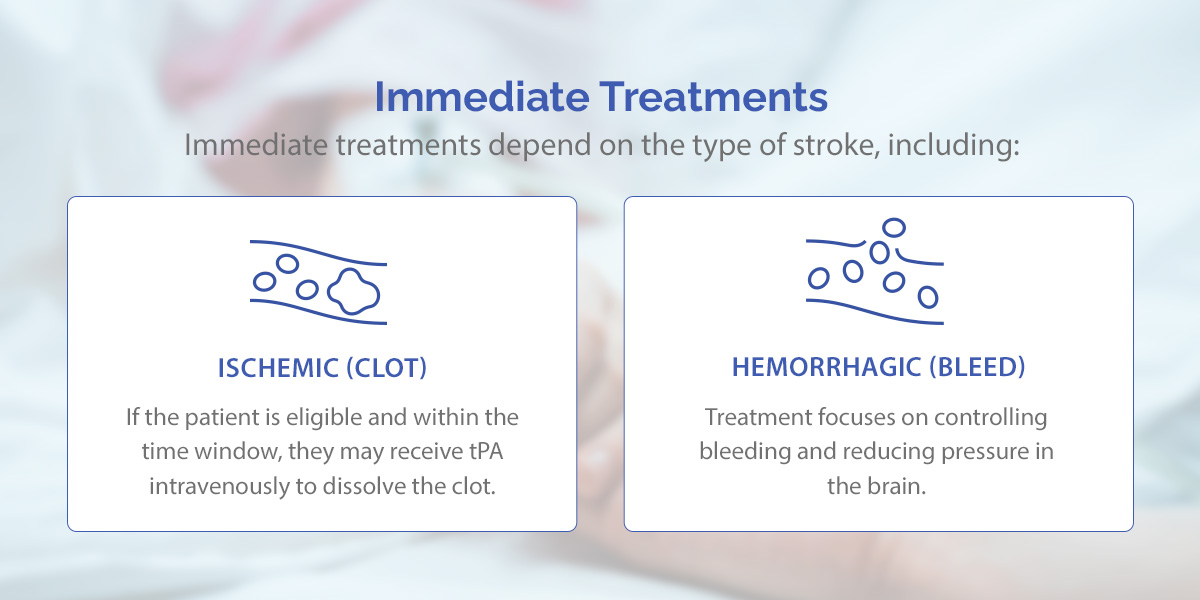
Immediate treatments depend on the type of stroke, including:
- Ischemic (clot): If the patient is eligible and within the time window, they may receive tPA intravenously to dissolve the clot. Doctors may also perform a mechanical thrombectomy, which involves threading a catheter through an artery in the groin up to the brain to physically grab and remove the clot.
- Hemorrhagic (bleed): Treatment focuses on controlling bleeding and reducing pressure in the brain. This may require medication to lower blood pressure or surgery to repair the ruptured vessel.
Prevention and Risk Reduction
Many risk factors for stroke are due to age or genetics, such as having a family history of strokes. However, the vast majority of stroke risk factors are manageable. This is where the role of a dedicated family caregiver becomes transformative.
Modifiable Risk Factors
Common risk factors for strokes include:
- High blood pressure: This is the single most important controllable risk factor for stroke. The longer you live with high blood pressure, the greater the risk of stroke.
- High cholesterol and diabetes: Both conditions can damage the blood vessels over time, increasing the likelihood of blockages.
- Smoking: Smoking thickens blood and increases plaque buildup in arteries. Quitting is one of the most immediate ways to lower risk.
- Obesity and physical inactivity: Excess body fat can contribute to conditions like high cholesterol, diabetes and high blood pressure, which can increase the risk of stroke.
- Alcohol intake: Drinking too much alcohol can increase blood pressure and triglycerides in the body, which can harden arteries and contribute to stroke.
Lifestyle Changes for Stroke Prevention
Making lifestyle changes is difficult for seniors to do alone. This is where support matters. You and other family caregivers can help your aging loved one decrease stroke risk with:
- Diet: A heart-healthy diet is low in sodium and saturated fats. Professional family caregivers can assist with cooking and eating assistance, ensuring seniors have delicious meals ready to eat and reducing the temptation of processed, salty foods.
- Exercise: Safe mobility is crucial for maintaining good circulation. Even light, chair-based exercises or assisted walks can improve cardiovascular health.
- Stress management: Chronic stress raises cortisol and blood pressure. A calm, supported environment at home reduces this strain.
Medical Management
You can help your loved one avoid a stroke with the help of a professional in-home companion who provides the following services:
- Adherence: Skipping blood pressure medications or blood thinners is a major trigger for strokes. A family caregiver provides medication reminders to support consistency.
- Monitoring: Regular home blood pressure checks can help detect a spike before it becomes a stroke.
- Appointments: Getting to the cardiologist or neurologist can be a logistical hurdle. A professional family caregiver can help your loved one get to their checkups.
Why Trust Village Caregiving?
At Village Caregiving, we believe that personalized home care is about more than just companionship — it’s about vigilant observation. Our family caregivers are trained to notice the subtle deviations in baseline health that often precede a major medical event, including slight slurs in speech or sudden unsteadiness.
We act as your eyes and ears when you cannot be there. From seeing that medication is taken on time to calling 911 the moment a symptom appears, our team is dedicated to keeping your loved ones safe, independent and protected.
How Village Caregiving Can Help Care for Your Loved One
A stroke can be frightening, but it’s also one of the most treatable medical emergencies if caught in time. By keeping the “BE FAST” framework in mind, you can be more prepared at the first sign of a stroke. If you’re concerned about an aging loved one living alone, or if you need support in managing the risk factors of stroke recovery, we’re here to help. Please contact us today to learn more about our services in supporting your family’s health journey.
Recent Comments