








Rated 4.9+ stars by
verified, happy customers

You might have broached the topic of getting help before, only to see your parent shut down or get defensive. Meanwhile, you're noticing that they struggle with daily tasks or are pulling away from activities they used to love.
When an aging parent refuses help, it rarely comes from stubbornness. Accepting support might stir up complicated feelings that can cause real resistance.
Before you can revisit the topic, you need to understand what's driving the resistance and find new communication strategies that speak directly to those complicated emotions.
It can be difficult to understand why an elderly parent refuses assistance, especially when they clearly need it. The truth is, aging parents rarely resist because they're being stubborn or difficult. Accepting help can stir up fears and feelings that feel too big to face, such as:
These feelings rarely stay invisible. They tend to surface as patterns and behaviors that signal the conversation can't wait much longer.
Knowing when to start talking to aging parents about care can feel unclear. You don't want to bring it up too soon, but you also don't want to wait until a crisis forces the decision. Certain signs make it clear the conversation needs to happen soon.
Over 14 million adults ages 65 and older report falling each year, and falls are the leading cause of injury-related death among seniors.
Subtle mobility signs often appear before a fall happens. Parents might grip furniture to move through the house, shuffle rather than walk normally or avoid stairs. When mobility signs become more prevalent, it's best to talk to your loved one about getting help.
Hospitalization is a natural opening for the conversation. Discharge planning requires thinking about what support looks like at home, which gives you a clear reason to bring up the need for help.
Non-adherence to medications is a serious issue. Missed doses, double dosing or expired prescriptions can have serious health consequences.
Another sign to look for is stacks of unopened mail, duplicate payments or confusion about accounts your loved one has managed for decades. Struggling with bills might signal changes in memory or executive function.
A messier home with expired food in the fridge, dishes piling up and laundry left for weeks can also indicate that your parent needs help.
These signs often cluster together. Anyone can miss a bill or forget food in the fridge, but missed medications, unpaid bills and a cluttered home together paint a clearer picture.
Social isolation in seniors is linked to higher rates of heart disease, depression and cognitive decline. These impacts on mood and cognition can ripple into everyday functioning — including keeping up with medications and bills.
A parent skipping things they used to love is itself a natural opener to check in. Help and companionship can truly make a big difference.
You now know when to start the conversation. It's just as important to approach it with tact, especially if your parent has already shut down previous discussions.
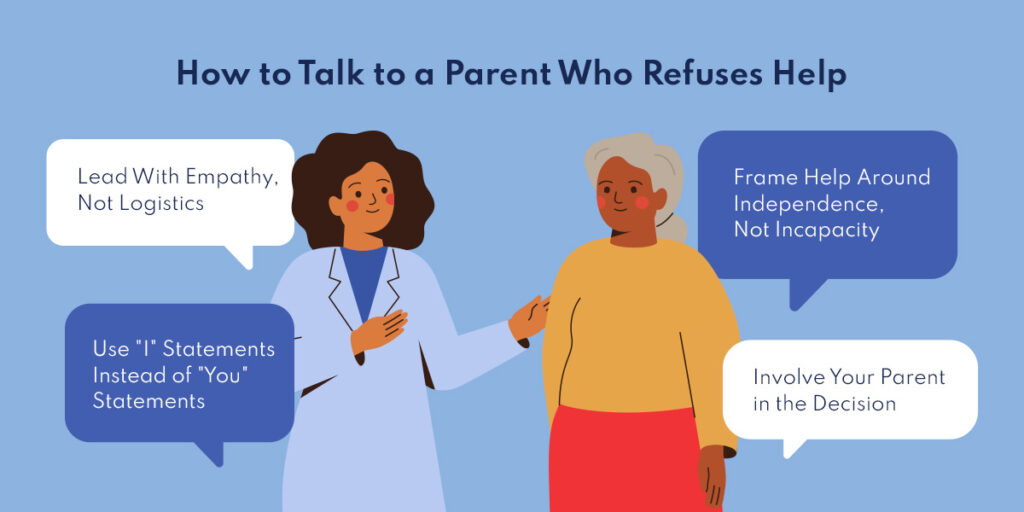
There are four tactics you can use when your elderly parent refuses help.
Before you bring up family care options, make sure your parent feels heard. Open the conversation with questions like "What worries you most about accepting help?" before proposing solutions. When you lead with empathy and understanding, your parent can voice the complex emotions that are keeping them from the care they need.
"You" statements — even well-intentioned ones — can feel like accusations. Shifting to "I" statements keeps the focus on your concern rather than their limitations. For example, you can say "I worry about you living alone" instead of "You can't take care of yourself."
Frame assistance as something that will help them stay home longer and more comfortably. This framing works precisely because most seniors' real fear isn't the help itself — it's what they think accepting help means.
For example, you can frame help as "Having someone help with the grocery run means you keep your routine," instead of "You need help getting around."
Empower your parent by involving them in the decision-making process. Offer choices around which days work best, which tasks feel most helpful and what level of support feels right.
Sometimes a doctor, counselor or care manager can say what family members can't. A third-party recommendation can often help convince an elderly parent to accept help. A primary care physician often carries enormous authority with this generation of seniors. Additionally, a geriatric care manager might be able to reframe the same conversation you've been having for months and actually land it.
Seeking professional help might not be your first step, but it can be helpful when you feel like you've hit a wall.
Consider starting with a few hours a week for one task, such as light housekeeping, instead of signing up for a full family care plan right away. Your parent only has to receive help for a few hours or for one task, which can reduce their discomfort. Meanwhile, you get a real starting point without having to commit to something big.
If you want to start small, look for a care agency that doesn't require contracts and offers a flexible hourly model. You can easily add more hours and tasks to a family caregiver's list as your parent becomes more comfortable.
The process of getting help is hard for adult children, too. Just like your parent, you might face difficult emotions like sadness, frustration and even guilt. These feelings are normal, and you don't have to navigate them alone.
Many find relief through in-person or online support groups. Groups like those hosted by the Caregiver Action Network can offer reassurance and let you get advice and learn coping strategies in a safe environment.
Change doesn't always happen in a single conversation. It takes time, multiple discussions and patience — and that's OK. You're navigating something hard and meaningful, and there's no rushing a decision this big.
When your parent is ready to take a first small step, Village Caregiving is here. We offer flexible, no-commitment care options that start where your family feels comfortable — whether that's a few hours a week for light housekeeping or companionship that helps ease isolation without overwhelming routines. Take a look at our respite care services to explore how we support families through transitions like this one.