

The primary difference between palliative and hospice care lies in their purpose. Hospice care is designed to provide comfort during the final stages of an illness, while palliative care aims to enhance comfort while you or a loved one receive curative treatments. When it comes to palliative vs. hospice care, the best option depends on prognosis.
What Is Palliative Care?
Palliative care is a specialized care that helps individuals improve their quality of life while living with a serious health condition. The primary goal of palliative care is to help manage the symptoms and side effects of a condition, alleviating discomfort.
Key Characteristics of Palliative Care
Understanding the following characteristics of palliative care can help you determine if it’s the right choice for you or a loved one:
- Availability at any stage of a serious illness: An individual can receive palliative care at any stage of an illness diagnosis.
- Supplemental to curative treatments: Palliative care provides comfort and support alongside curative treatments. It improves a person’s well-being while they receive treatments.
- Focus on symptom management and improving quality of life: The main goal of palliative care is to actively relieve or prevent adverse side effects of an illness or treatment. It often involves managing pain or uncomfortable symptoms.
- Holistic approach: Palliative care addresses the physical, spiritual, emotional, social and psychological needs of a patient and their family.
- Broad eligibility: An individual is eligible for palliative care if they have a serious illness and wish to receive symptom relief.
- Insurance coverage: Standard health insurance plans and Medicare Part B often cover palliative care services, and patients may be responsible for deductibles or copays.
When to Choose Palliative Care
Palliative care can benefit anyone with a serious condition such as cancer, heart failure, chronic obstructive pulmonary disease, lung disease or dementia. Consider palliative care if you or a loved one experiences uncomfortable symptoms such as nausea, pain, or fatigue. You may also seek palliative care to help manage anxiety or depression that occurs with an illness. Palliative care is an excellent supplement to treatment if these symptoms make it challenging to find peace or enjoy life.
A palliative care team can also support family members of patients. Palliative care teams often help patients and their families understand treatment options and make decisions that align with their goals.
Advantages of Palliative Care
Palliative care offers the following advantages:
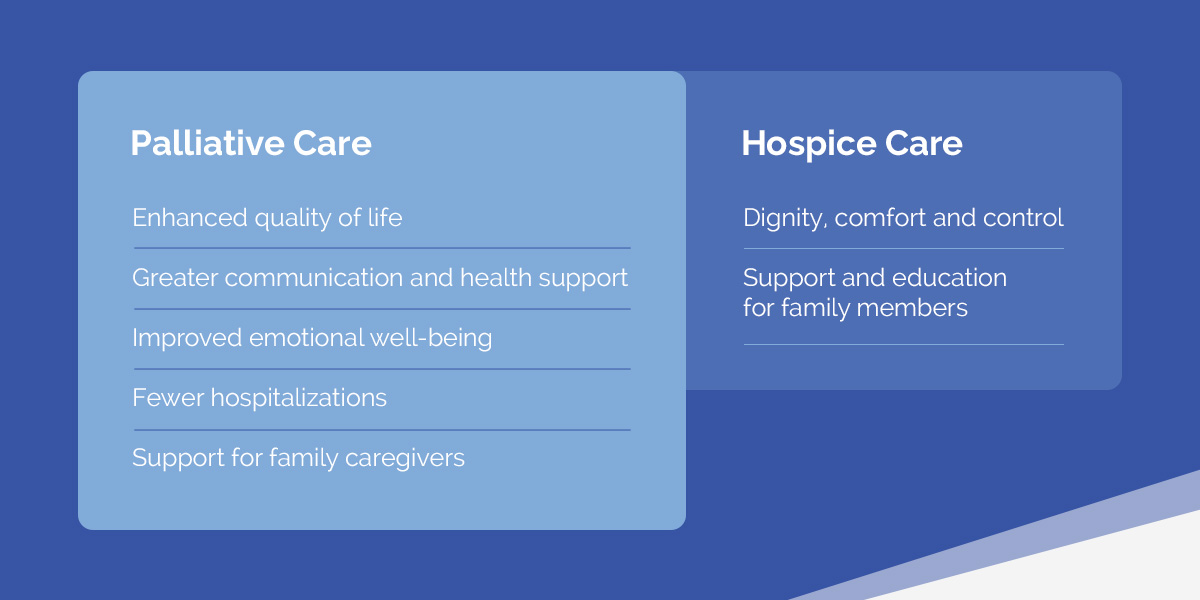
- Enhanced quality of life: The main benefit of palliative care is enhanced comfort and quality of life for patients. It’s specialized to prevent or reduce symptoms such as nausea, pain and fatigue.
- Greater communication and health support: Palliative care facilitates productive discussions about care goals and treatment options. This helps ensure that medical care aligns with a patient’s preferences and values.
- Improved emotional well-being: Palliative care can address psychological distress, such as anxiety and depression, that may accompany an illness.
- Fewer hospitalizations: Proactive symptom management can help prevent complications that cause hospital stays or emergency room visits.
- Support for family caregivers: Palliative care helps family members cope with the complexities of caring for a loved one.
What Is Hospice Care?
Hospice care is specialized support for individuals coping with terminal illness. It focuses on comfort during the end stages of an illness rather than during treatment or while pursuing a cure. Individuals often receive hospice care in the comfort of their own home, but they may also receive it in an assisted living facility, a nursing home or a dedicated inpatient hospice facility.
Key Characteristics of Hospice Care
The following are key characteristics of hospice care:
- Life expectancy of six months or less: Hospice care is intended for individuals who are expected to live six months or less if they let their condition run its natural course.
- Focus on comfort over curative treatment: Hospice care focuses on comfort and pain relief over aggressive treatments.
- Holistic end-of-life support: Similar to palliative care, hospice care addresses patients’ emotional, spiritual, and physical needs. It also supports family members throughout the end-of-life process and the bereavement period.
- Insurance, Medicaid and Medicare coverage: Medicaid, Medicare Part A and most private insurance plans cover hospice care. This helps cover support services, medical equipment and symptom control measures.
- Interdisciplinary approach: Hospice care typically involves an interdisciplinary team of social workers, doctors, nurses, trained volunteers and spiritual counselors. This helps meet the diverse needs of each patient and their family.
When to Consider Hospice Care
You should consider hospice care if you or a loved one receives a prognosis of six months or less and decides to stop curative treatments. Providers often recommend hospice care when treatments stop working, or there is a significant decline in you or your loved one’s ability to perform daily activities.
Advantages of Hospice Care
Hospice care offers the following advantages:
- Dignity, comfort and control: Hospice care helps patients live with more comfort, control and dignity in their final months.
- Support and education for family members: Family members receive education, guidance and support through hospice care, helping them cope with their loved one’s prognosis and the grieving process. A hospice team also handles a patient’s medical care coordination, helping family members focus more time on enjoying moments with their loved one.
Common Misconceptions About Palliative and Hospice Care
Clearing up the following misconceptions about palliative and hospice services is important to understanding care options:
Myth: Palliative Care Means Giving up Hope
Choosing palliative care does not mean you or a loved one has given up hope for a cure. It focuses on providing comfort alongside curative treatments. Palliative care helps patients maintain a sense of hope through well-being and meaningful experiences.
Myth: Palliative Care Is for End-of-Life Situations
Palliative care is often mistaken for end-of-life care, but it is intended for any stage of a serious illness. It can occur as early as diagnosis and last for years if needed. Receiving palliative care does not mean that you or a loved one has reached the end stages of an illness. It aims to provide support regardless of your prognosis or where you are in your treatment journey.
Myth: Palliative and Hospice Care Are Only for Cancer Patients
Palliative and hospice care can benefit individuals with any type of serious illness. You or a loved one may seek palliative or hospice care services for conditions such as kidney disease, heart failure, dementia or Parkinson’s disease.
Myth: Palliative Care Is Only Available in Hospitals
While you can receive palliative care in a hospital setting, it is also available in assisted living facilities, nursing homes and the comfort of your home. Palliative care providers can travel to your home and provide care on a schedule that works best for you.
Village Caregiving’s Compassionate Palliative Care Services
Village Caregiving offers holistic palliative care services to help you or a loved one enhance independence and comfort. We personalize support and tailor each care plan with services such as:
- Nonmedical symptom management, like medication reminders and gentle stretching.
- Companionship and emotional support.
- Spiritual support.
- Meal preparation.
- Light housekeeping, such as laundry and sweeping.
- Transportation for errands, enjoyable activities and doctor’s appointments.
- Safety monitoring.
- Healthcare coordination.
- Respite care.
Enhance Comfort and Quality of Life With Village Caregiving
If you or a loved one lives with a serious illness, palliative care can enhance comfort and quality of life. Village Caregiving offers compassionate nonmedical palliative care services, making life easier and more comfortable as you navigate your illness. Our experienced family caregivers can help you through meal preparation, light housekeeping, companionship and communication with healthcare providers. Contact us to learn more about our palliative care services and how we can provide comfort for you or a loved one.

Recent Comments