








Rated 4.9+ stars by
verified, happy customers

Alzheimer's is the most common cause of dementia, a general term for memory loss serious enough to interfere with daily life. Alzheimer's disease accounts for 60-80% of dementia cases. If you or your loved one is experiencing Alzheimer's symptoms, you're not alone.
Seeking support for a loved one with Alzheimer's is vital for improving their quality of life, maximizing their independence and managing daily challenges. Proper support reduces stress and helps families make important legal and financial decisions.
Recognizing the warning signs can open the door to treatments and planning that make a real difference. This guide explores 10 early signs of Alzheimer's disease and provides helpful resources for those navigating the process.
Understanding Alzheimer's disease can shape the support, care and quality of life available to your loved one.
Alzheimer's is a progressive disorder that impairs thinking skills, memory and eventually the ability to perform daily tasks. The disease is characterized by abnormal protein buildups in the brain that damage neurons over time.
Though we do not yet fully understand what causes Alzheimer's, it is likely caused by a combination of factors, such as genes, family history, environment and lifestyle.
While most people associate Alzheimer's with seniors, early-onset Alzheimer's can affect people in their 40s or 50s. The disease differs from other types of dementia in its specific pattern of brain changes and symptom progression, though all forms of dementia affect memory and cognitive function.
Catching Alzheimer's warning signs early offers several benefits:
The lifetime risk for Alzheimer's at age 45 is 1 in 5 for women and 1 in 10 for men. Knowing this risk can empower families to take proactive steps.
The following early Alzheimer's symptoms differ from typical age-associated changes and warrant attention.
One of the most common Alzheimer's symptoms is forgetting recent information. Your loved one might ask for the same details repeatedly or rely heavily on reminders or notes for things they used to handle easily. Alzheimer's goes beyond occasionally forgetting a name or an appointment. It's a pattern of memory loss that disrupts daily routines.
Some individuals with Alzheimer's lose the ability to make and follow plans or work with numbers. They might have difficulty following a familiar recipe, tracking monthly bills or concentrating on tasks that require sequential steps. Tasks that once came easily now take much longer and require more effort.
People with Alzheimer's often find it challenging to complete tasks they've done for years. They might struggle with driving to a familiar place, following a work budget or understanding the rules of a long-played board game. These aren't occasional slip-ups, but rather consistent difficulties with routine activities.
Confusion about the passage of time is another warning sign. Your loved one might not recognize their location or how they got there. They may have trouble understanding something if it's not happening immediately, or they might not remember what day of the week it is without checking multiple times.
For some people, vision problems are a sign of Alzheimer's. They might have trouble reading or determining distance. These challenges can affect their ability to drive, as they may have trouble recognizing familiar landmarks or understanding how far away another car is.
Someone with Alzheimer's might have difficulty following a conversation. They might stop mid-sentence without knowing how to continue, or they may repeat themselves. They often struggle with vocabulary, having trouble naming familiar objects or calling things by the wrong name.
An individual with Alzheimer's disease may put items in unusual places, such as keys in the refrigerator or a wallet in the bathroom. They lose items and can't retrace their steps to find them again. Misplacement becomes more frequent over time and can lead to accusations that others are stealing or hiding their belongings.
Changes in judgment or decision-making are common. Your loved one might give large amounts of money to telemarketers, make uncharacteristic financial decisions or pay little attention to personal hygiene. These decisions seem out of character and may put them at risk.
A person with Alzheimer's may start to withdraw from hobbies, social activities, work projects or sports they once enjoyed. They might avoid social situations because they've noticed changes in themselves, or they may struggle to keep up with conversations and activities that were once easy.
The mood and personality of people with Alzheimer's can change dramatically. They may be confused, suspicious, depressed, fearful or anxious. They might become easily upset when they're out of their comfort zone. Family members often notice their loved one seems different in ways that are hard to define but unmistakable.
Recognizing the signs is the first step. Knowing when and how to seek medical evaluation is what turns awareness into action.
It's time to visit a doctor about Alzheimer's if you or your loved one experiences consistent memory loss, confusion with time or place, challenges solving problems or significant personality changes. Don't wait for symptoms to become severe — early evaluation is essential for managing symptoms and planning ahead.
If multiple warning signs from the list above are present, or if the changes are interfering with daily activities and relationships, schedule an appointment with your loved one's primary care physician. They can perform an initial assessment and refer you to a specialist if needed.
Having a conversation about memory concerns can feel overwhelming. These strategies can help make the discussion more productive and less stressful:
Diagnosing Alzheimer's is a comprehensive process involving medical history, cognitive tests, neurological exams and brain imaging to rule out other conditions. While no single test exists, doctors use these steps to determine if symptoms indicate dementia:
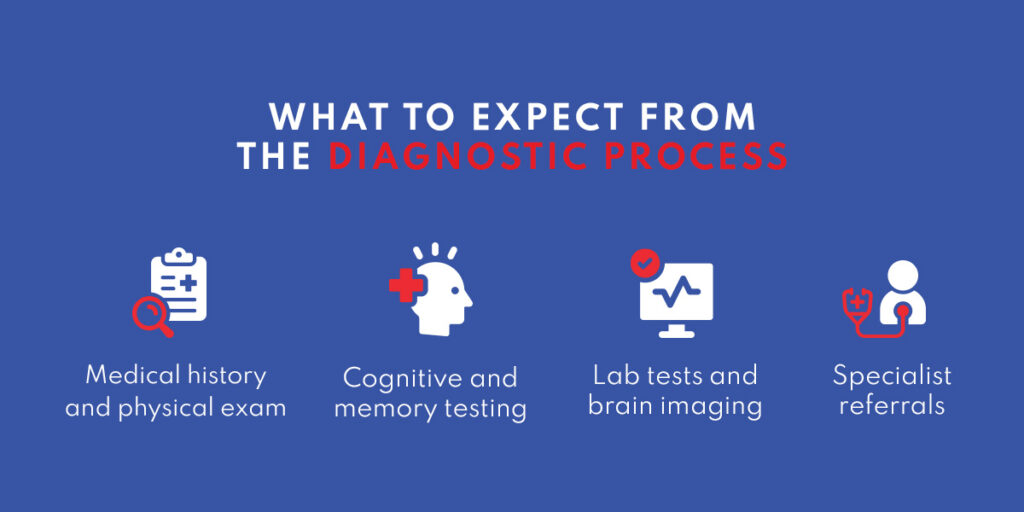
Good preparation makes medical appointments more productive and less stressful for everyone involved.
Having this information organized in advance helps the doctor get a complete picture quickly:
Consider bringing these questions to guide the conversation:
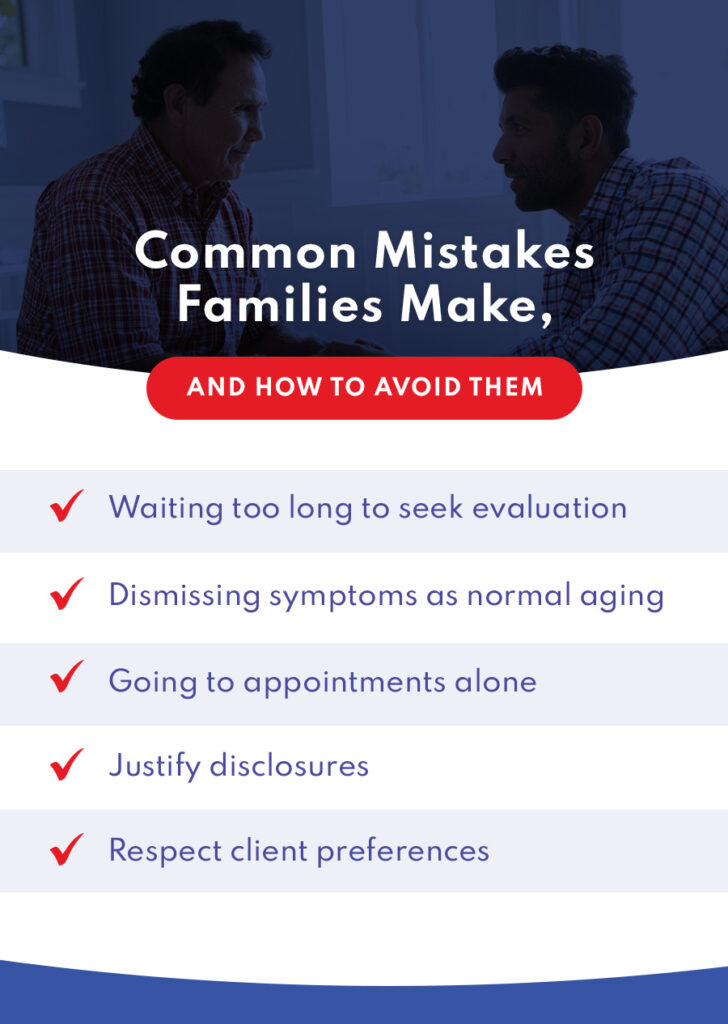
Even with the best intentions, families can make mistakes that delay diagnosis or increase stress. Here's how to avoid the most common pitfalls:

You don't have to navigate this journey alone. These organizations offer education, support and practical help for families affected by Alzheimer's:
At Village Caregiving, we've built our reputation on being there when families need us most. We're a company that values flexibility and compassion above all else. If your loved one needs something unconventional, whether it's a specific routine or a favorite meal prepared a certain way, we say yes when others say no.
Each of our offices has a 24/7 cell number, which means you speak directly with your assigned office. When you have a question, concern or need at 2 a.m., you reach someone who knows your family and your situation.
We understand that everyone's situation is different. Our family caregivers are here to work alongside you as you navigate the challenges of Alzheimer's care, offering guidance when you need it and stepping back when you don't. Your loved one's dignity, independence and quality of life are our priorities, too.
At Village Caregiving, we specialize in Alzheimer's and dementia home care services that help your loved one maintain their routine. Our compassionate family caregivers provide consistent support, from gentle medication reminders to companionship during daily activities.
We understand that caring for someone with early-stage Alzheimer's means balancing their independence with your concerns about their well-being. Our services adapt as your needs change.
You don't have to navigate this journey alone. Contact us to learn how we can support your family, or find a location near you to speak with someone who understands what you're going through.