








Rated 4.9+ stars by
verified, happy customers

As your loved ones age, family dynamics, routines and roles start to change. It is a challenging time for everyone, and being compassionate with yourself and others will help you find a comfortable solution for everyone.
Talking to older adults about in-home care can be a difficult conversation. We’ve put together a guide and a few tips to help you discuss this option with confidence and trust.
Emotionally dealing with older family members takes time to learn. You and them are adapting to a new reality and way of relating to each other. Responsibilities might shift when your older family members can’t care for themselves as they used to, and many of those responsibilities might come your way. It is not easy to acknowledge these changes from any side.
Dealing with older family members can be emotionally draining, and you might sometimes feel lost and unsupported. Remember that you are giving your best and asking for help and support, whichis also a way of caring.
As a family caregiver, you need to have a heartfelt conversation with your loved one. Approaching it positively and empathetically can be fruitful and improve your relationship. Consider the following before communicating with elderly family members:
As long as the conversation comes from the heart and you allow yourself to be vulnerable, you’ll create a secure space that promotes open dialogue. Your family members will be eager to listen to your proposal.
As your loved one ages, you’ll likely take on more of their responsibilities, adding to your own. As a family caregiver, you’ll start to get more involved in their lives, and downtime, exercise or social activities might be on pause for a while.
Remember that you are human and need rest, connection and time to yourself. Taking care of yourself and finding ways to avoid burnoutwill help you keep assisting and actively participating in your older family members’ lives.
It’s hard for anyone to accept that they’re aging and that the things they could once do on their own now require assistance. Your parent is likely aware of this situation, and accepting in-home care means acknowledging that they’ve aged — this might be part of why they’re refusing the conversation. Use these tips to help them be more open to accepting assistance.
As our loved ones age and start experiencing changes in their body, mind and ability to take care of themselves, they may also experience a loss of independence, a sense of pride and the fear of being unable to live on their own terms. Their goals might differ from yours if they want to keep as much autonomy as possible while you want to provide as much security as possible.
Your loved one is dealing with the fear of not being able to perform everyday tasks that they have been able to handle for themselves throughout their adult life. Needing care and guidance from younger people, whom they once took care of, reinforces their idea of losing autonomy and independence.
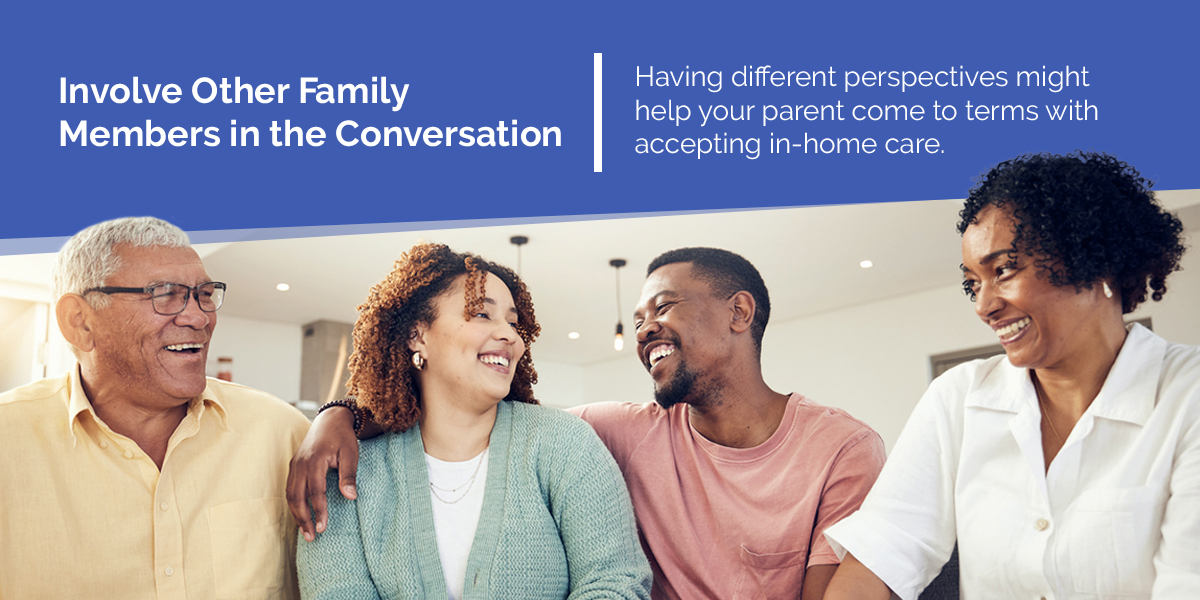
In the conversation, involve other family members and close friends who genuinely care about your loved one’s well-being. Having different perspectives might help your parent come to terms with accepting in-home care. Make it a small crowd. Your loved one should feel comforted and not threatened.
It might help to make the conversation about you, not them. You can speak as if you were in the position and ask for advice. Be vulnerable and express your fears and concerns from your heart. Let your loved one know that accepting in-home care will give you peace of mind and allow you to spend extra time and energy with them.
By involving your parent as essential to the decision-making process, you can help them overcome the fear of losing their identity, independence and autonomy. Let them choose the option that best fits their preferences and the one they feel more comfortable with. Remember that this option will also need to give you the peace of mind and rest you deserve.
Remember that your loved ones are adults. As adults, they still want to be able to decide for themselves. Talk to them with dignity and respect.
In-home care for older adults can significantly impact family dynamics by taking responsibility for family caregivers’ shoulders. Investing in in-home care will help the family focus on enjoying themselves and strengthening their bond.
Some of the benefits that in-home care brings to family dynamics are:
The key to any successful relationship is open and ongoing communication. Talk to your loved one and your in-home caregiver to adjust as needed.
Talk to Village Caregivingabout care for your loved ones. We guide you and your familythrough the next steps to deciding the best course of action for the older adult in your life. Our process will provide you with everything you need to be sure that you’re making the right decision by following these simple steps:
We understand how important it is for you and your family to enjoy your home. Since 2013, we have been committed to providing quality of life, health and peace of mind through our services for older people and their family members. Contact us today. We are happy to answer all your questions and fulfill your needs.