

Planning can be the best way to honor a loved one’s wishes. If a sudden fall or illness makes it impossible for your aging loved one to speak for themselves, legal documents can become their voice. From medical power of attorney to a living will, gathering these documents will help you keep things in control in the event of an emergency.
Older adults need five essential legal documents to protect their finances, choices and independence. We’ll break each one down and explain their importance.
Why Planning Matters for Seniors
While thinking about your loved one’s future may feel overwhelming, forethought can go a long way in building security and peace of mind for your family. Respectful preparation is all about giving your senior loved one a way to maintain control over their life. Even when they can’t vocalize their wishes, they can live more fully when you honor their preferences.
Preventing Court Intervention
Many families must go to court to establish a guardianship or conservatorship. For instance, imagine a severe illness prevents your loved one from managing their bank accounts, paying their bills or even discussing medical care with their doctor. With the correct legal documents in place, you can avoid unexpected expenses and manage the situation with less stress and effort.
Reducing Family Conflict
Even the closest families can experience tension and disagreement in stressful circumstances, especially those surrounding a parent’s care or estate. Without specific instructions, adult children can find themselves at odds, trying to determine the best way to handle financial decisions, medical treatments or living arrangements. While fueled by love and concern, these disagreements can create family conflict.
The advantage of legal documents is that they communicate your loved one’s wishes without room for interpretation or argument, so you can spend more time enjoying each other’s company.
Unlocking Care Options
When a senior needs care, whether in-home assistance, skilled nursing or a routine doctor’s visit, there are many considerations involved. Most service providers, including banks and care agencies, can’t legally discuss an account with a family member if they lack proper authorization.
Having the appropriate documentation will let you help your loved one get the best possible care without delays or financial complications.
What Documents Does an Elderly Person Need?
It’s understandable to feel overwhelmed when thinking about legal matters. To help, we’ve compiled a checklist of the legal documents seniors need, covering everything from managing finances to making decisions about health care. Before we discuss them, note that Village Caregiving is not a law firm, and this is not legal advice. We recommend consulting an elder law attorney to draft the paperwork.
1. Durable Power of Attorney

A durable power of attorney allows a trusted person, known as an agent, handle financial matters such as paying bills, managing accounts, signing contracts, making investment decisions or even selling property on your loved one’s behalf. It essentially gives you authority to handle finances if your loved one is too ill to do so themselves.
You should know the difference between a durable and a general power of attorney.
- Durable POA: A durable POA stays valid even if a senior becomes impaired. It provides continuous protection, allowing you to manage finances responsibly, regardless of the health challenge that arises. It can take effect immediately upon signing or only when a specific event occurs, such as the certification of two doctors that your loved one is incapacitated.
- General POA: A general POA is only valid as long as the person who created it is mentally competent. If they become incapacitated, such as from dementia or a severe stroke, a general POA immediately becomes invalid, which would leave your family back at square one, potentially needing to go to court for guardianship.
Why It’s Essential
Without an explicit legal mechanism, tasks like managing utility bills, mortgages or investments grind to a halt. A medical crisis could lead to a financial one, with unpaid bills, frozen accounts and inaccessible assets. With a durable POA, you can appreciate a smoother experience paying for home care, medical expenses and even groceries, as you can easily access your loved one’s funds.
The document authorizes you to step in immediately, running the household and preventing financial issues in an already challenging time.
2. Medical Power of Attorney
A medical power of attorney is a legal document that designates a specific person to make medical decisions on the senior’s behalf if an emergency strikes or cognitive decline makes communication difficult or impossible.
The agent must advocate for the senior’s preferences and best interests, not their own. That means listening to medical professionals, understanding treatment options and making choices based on conversations they’ve had with the senior or the instructions they’ve laid out in legal documents like a living will.
The agent is there to be the senior’s voice, even when they can’t speak — a responsibility requiring trust and an understanding of your loved one’s values.
Why It Should Be a Priority
A medical power of attorney is one of the first things a hospital, clinic or emergency medical personnel will request in an emergency. If this document isn’t available, the provider may have to make decisions based on what they believe is in the patient’s best interest or seek a court order, potentially delaying critical care or leading to decisions that may not align with your loved one’s values.
If you’re the designated agent and have a medical POA on hand, you can immediately step in. Doctors can give you confidential medical information about your loved one, discuss treatment plans with you and let you make care decisions that respect your loved one’s wishes. With the medical POA, medical professionals can provide treatment faster, while you focus on being present for your loved one.
3. Living Will
A living will outlines your loved one’s wishes about medical care and end-of-life situations. Unlike a medical power of attorney, which designates an agent to make health decisions on someone else’s behalf, a living will defines your loved one’s preferences about life-sustaining treatments if they become terminally ill or unconscious.
Why It’s Critical
Making end-of-life decisions for a loved one is unimaginably complex, but a living will can ease the burden. When doctors present options about life support, resuscitation or artificial feeding, it’s natural for family members to feel guilty or second-guess whether they’re doing the right thing.
A living will spares your family from making these decisions under pressure by unambiguously stating your loved one’s preferences, giving you essential insights into what they want and expect. It can let your family be present, offer comfort and cherish final moments together without untangling thorny ethical dilemmas. It’s a powerful statement of a senior’s autonomy and a testament to their love for their family.
4. Last Will and Testament
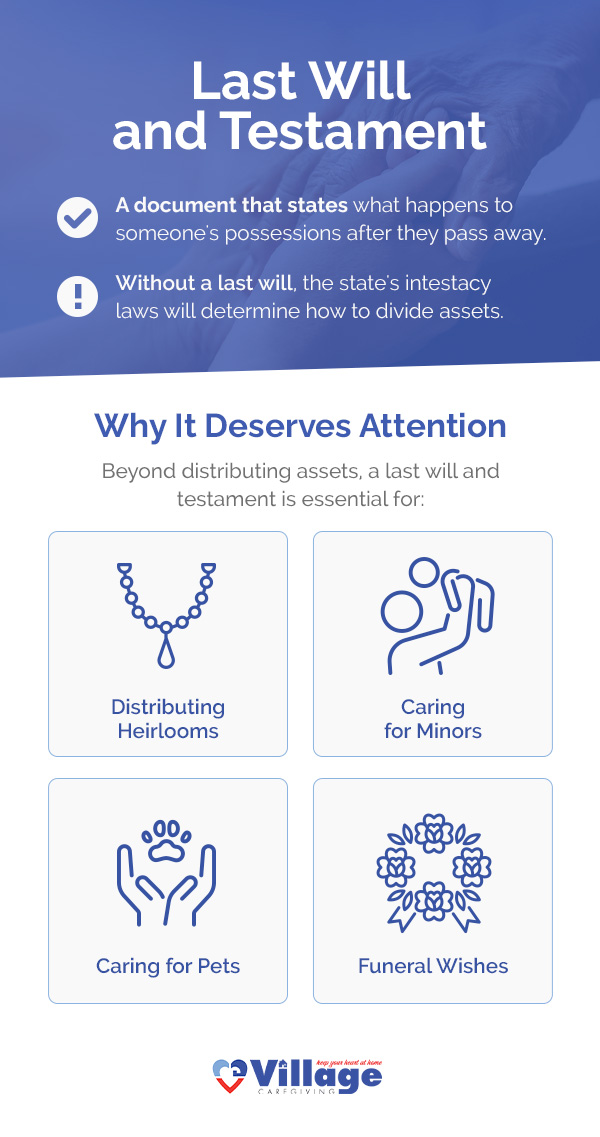
The last will and testament is a document that states what happens to someone’s possessions after they pass away. It lets seniors designate the people, charities and organizations that might receive specific items or portions of their estate. Without a last will, the state’s intestacy laws will determine how to divide assets, which might not align with your loved one’s wishes or your family’s needs.
The document also names an executor, who is responsible for carrying out the instructions in the will, from gathering assets to paying debts and distributing the remaining estate to beneficiaries.
Why It Deserves Attention
Beyond distributing assets, a last will and testament is essential for:
- Distributing heirlooms: Ensuring cherished heirlooms go to those who will treasure them most.
- Caring for minors: Designating care for minor children or grandchildren who depend on the senior.
- Caring for pets: Setting aside money for pet care and naming a specific caregiver.
- Expressing funeral wishes: Expressing preferences for funeral arrangements, such as burial or cremation, though this is not legally binding in all states.
5. HIPAA Release Authorization
Federal privacy laws prevent doctors from sharing medical information even with spouses or adult children, unless the patient signs a specific release. As a family member, you should ask your loved one for Health Insurance Portability and Accountability Act release authorization. A HIPAA release gives designated people quick, broader access to medical records. It says who can receive, review and discuss your loved one’s health information with medical personnel.
Why It’s Necessary
While HIPAA provides vital privacy protection, it also means health providers can’t legally share medical information with you unless you have authorization, even if you’re intensely involved in a senior’s care. With HIPAA release, you can:
- Receive updates on your loved one’s prognosis and treatment.
- Discuss test results and medical history with a doctor.
- Coordinate care with different providers.
- Learn the discharge instructions.
- Manage prescription refills.
Ultimately, HIPAA release authorization lets you communicate with your loved one’s medical team, stay informed and updated and eliminate delays. This simple form can bring peace of mind and help you coordinate care for your loved one.
Where to Keep Your Legal Documents
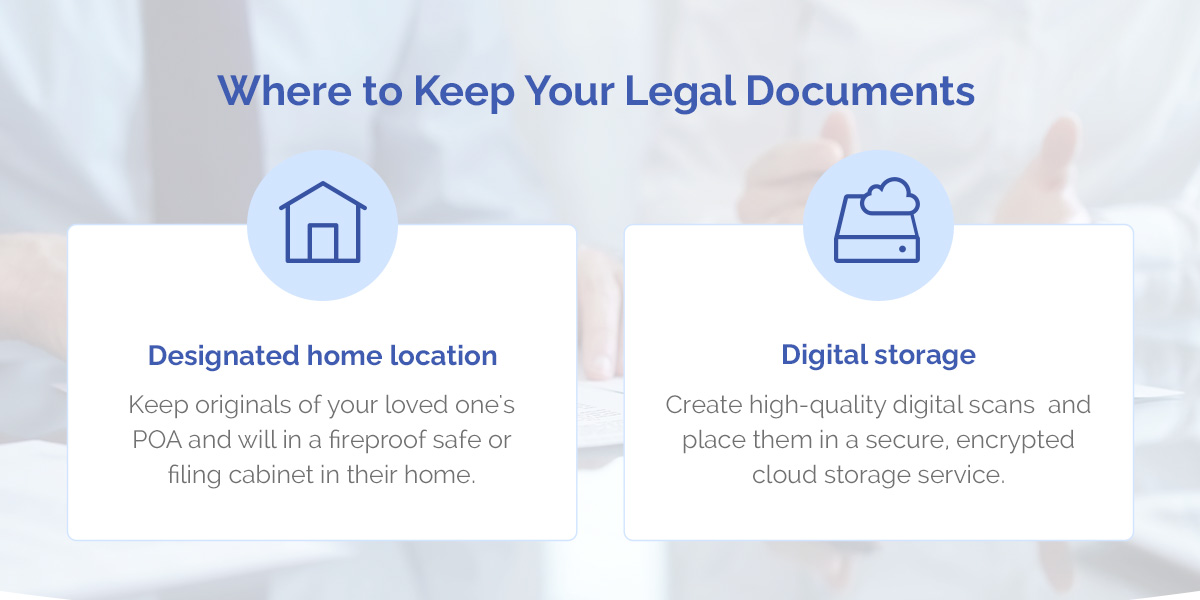
Once you’ve gathered your senior loved one’s documents, you’ll need to put them somewhere you can easily access them when you need to.
- Designated home location: Keep originals of your loved one’s POA and will in a fireproof safe or filing cabinet in their home or with the appointed agent.
- Digital storage: Create high-quality digital scans of the senior’s documents and place them in a secure, encrypted cloud storage service that the appointed agent can access. A USB drive shared only with the POA can also be a good option.
Inform your family members and the appointed agent where to find the documents. Everyone should be on the same page so they can quickly find what they need when the time comes.
How Legal Preparation Supports Aging in Place
Aging in place is the dream for many seniors, as it lets them remain in comfortable, familiar surroundings for as long as possible. Thoughtful legal preparation can create the foundation that lets your loved one maintain their independence as they preserve their routines and cherished memories.
- Simplifies in-home services: Having a power of attorney in place makes it easier to hire in-home care services for your loved one. For example, you have the authorization you need to sign service agreements and manage payments on their behalf.
- Gives peace of mind: Caring for an aging parent can take an emotional toll, but laying the legal and administrative groundwork ahead of time frees you to spend quality time with your loved one instead of getting caught up in the minutiae of paperwork or phone calls.
At Village Caregiving, we understand that the medical and financial decisions you make for loved ones are comprehensive. Though we don’t provide legal advice, we are your partner for the physical and emotional side of aging in place. While you handle the legal protections, our professional family caregivers provide the companionship, safety supervision and day-to-day assistance seniors need to age gracefully.
Get Compassionate Support From Village Caregiving
Gathering the essential legal documents can help your family prepare for anything as you carry out your loved one’s wishes. As you make these vital preparations, let Village Caregiving offer the personalized support older adults need to thrive at home.
From companionship care to hygiene services and transportation, we go the extra mile to deliver the care your family needs. Contact us today to learn more about our services and how we can become a trusted partner regardless of what the future brings.

Recent Comments