

The Health Insurance Portability and Accountability Act (HIPAA) is a set of national standards for how health care providers, caregivers and related organizations must store and handle sensitive health information. The U.S. Department of Health and Human Services (HHS) and the Office for Civil Rights (OCR) create and enforce HIPAA regulations to protect individuals’ privacy regarding their health.
Navigating HIPAA in home care settings is easier when you understand common misconceptions, best practices and special considerations regarding its privacy laws.
What Is HIPAA?
HIPAA was established in 1996 to protect sensitive patient health information and make health care administration more efficient. It helps standardize electronic health data and consists of the following components:
- Privacy Rule: The HIPAA Privacy Rule sets rules for disclosing and using protected health information (PHI).
- Security Rule: The Security Rule requires covered entities to protect electronic PHI (ePHI) through physical, technical and administrative safeguards.
- Breach Notification Rule: The HIPAA Breach Notification Rule requires organizations to notify impacted individuals and authorities if a breach of unsecured PHI occurs.
HIPAA applies to covered entities, such as health plans and health care providers. It also covers business associates that have access to PHI and perform services for covered entities.
Importance of HIPAA Compliance in Home Care
HIPAA compliance is vital in home care for the following reasons:
Patient Protection
HIPAA regulations help ensure each patient’s sensitive health information remains secure and confidential. They safeguard personal well-being and privacy by preventing the unauthorized use, access and disclosure of medical records. This is essential because it helps patients avoid potential embarrassment or discrimination regarding their health.
Client Trust
When a client knows their caregivers protect their personal health information, they have greater trust. Clients are more likely to feel confident and comfortable in your care when you follow HIPAA regulations, giving them more peace of mind in your presence. This leads to more positive experiences for you and the individuals you care for, and it can help you maintain long-term caregiving relationships.
Prevention of Financial and Legal Penalties
Noncompliance with HIPAA can lead to significant legal repercussions and financial penalties for caregivers and home care agencies. Adhering to HIPAA regulations helps you or your agency avoid lawsuits and fines. This also helps you or your agency maintain a positive reputation within your community.
Smoother Operations
Implementing HIPAA-compliant practices helps streamline data management and communication processes. It provides clear guidelines for handling patient information, helping you reduce errors and improve efficiency. HIPAA regulations foster a more organized operational environment.
How Does HIPAA Apply to Home Care Agencies?
The HIPAA Privacy Rule does not grant special status to caregivers. However, home care agencies are considered covered entities if they provide paid care services and handle patients’ health information. All staff within a home care agency must receive thorough HIPAA training so they understand how to handle patient health information properly. A home health care agency must also implement secure communication tools, such as software with strong encryption, to comply with HIPAA.
Common Myths and Misconceptions About HIPAA in Caregiving Settings
Debunking the following misconceptions about HIPAA in caregiving settings is vital for understanding how regulations apply to caregivers:
- Communication with family members is prohibited: It’s a common misconception that HIPAA prohibits communication with a patient’s family members. HIPAA permits providers to share information with family, caregivers and friends as long as the patient agrees.
- Minor violations are insignificant: Many people believe HIPAA violations are minor, but even the smallest violations can result in significant penalties. Avoiding unauthorized access or oversharing is vital.
- HIPAA only applies to ePHI: HIPAA applies to all forms of PHI, including written, electronic and oral information.
- Patients must give written consent for all shared information: Written consent is not always a requirement. Providers can share treatment information with other providers without written consent, and they can share information with family if they have a reasonable belief that the patient would consent. Patients can also give verbal consent.
- Staff can access any patient details: It’s a common myth that medical or caregiving staff can access any patient health information as long as it’s for a “good reason.” However, staff are only permitted to access the minimum amount of information necessary to perform their specific job. For example, a caregiver should only access medication details if they help manage medication or provide medication reminders.
- HIPAA only applies to health care providers: HIPAA compliance is the responsibility of health care providers, caregivers and third-party vendors such as billing companies that may store or access information.
Understanding Best Practices and HIPAA Laws for Caregivers
If you are an independent caregiver, operate a home care agency, or work for an agency, these are some of the most important best practices and HIPAA laws to follow:
Safeguarding PHI
Protecting PHI is one of the most important aspects of HIPAA compliance. As a caregiver, you may need to access and protect client details such as the following:
- Names, street addresses and contact information such as phone numbers and email addresses
- Photos
- Medicare beneficiary numbers and Social Security numbers
- Device serial numbers, IP addresses and URLs
- Information about medications, such as prescriptions, dosages and instructions
- Health histories, diagnosed conditions and treatment plans
- Insurance providers and details
- Financial account numbers and billing statements
- Appointment schedules
- Dietary restrictions
- Mobility limitations and cognitive status
Electronic and paper PHI present distinct risks and require different levels of protection. You should always store, view and handle electronic information on password-protected devices and safeguard it with robust security software. It’s also important to keep agency devices, such as phones and laptops, in secure areas where the public cannot access them. Physical documents containing PHI require secure storage in locked containers, and you should shred them when they are no longer needed.
As a caregiver or agency manager, it’s vital to avoid discussing client details in shared or public spaces. You can share information with family members as long as the client gives consent, but these conversations should occur in a private setting.
Authorization and Consent
Understanding when and how to share information is essential for protecting clients’ privacy. Written authorization is required for any information a client discloses for specific purposes not permitted by HIPAA. For example, you must obtain written authorization if you use a client’s name for marketing purposes, such as testimonials.
Consent is a less strict form of permission that is necessary when you bill for services or collect information about clients’ specific health conditions and care needs. If you or your agency help clients coordinate medical care and make appointments, they must give consent for you to access information such as their health care providers and locations. If you obtain verbal consent to access or share information, it’s best practice to document the following details:
- The date and time that you receive the verbal consent
- Who provides consent and who receives it
- The specific information the client consents to share
- The purpose of the disclosure
- Any instructions or limitations the client provides
Circle of Care
A circle of care refers to a client’s health care providers, caregivers, authorized family members and third-party vendors who need to access their personal health information. Identifying the individuals directly involved in a client’s care and limiting their access to only the minimum information necessary to perform their duties is essential. Establishing this circle of care helps prevent you or your agency from sharing private details with the wrong individuals.
Technology
Digital communications present unique challenges regarding HIPAA compliance. Sharing information via text and email requires device security and careful attention to detail to prevent information from reaching the wrong individuals.
As a caregiver, you must be careful to avoid sending private client information to unauthorized recipients or including nonessential details in your communications. It’s also important to avoid posting any type of client PHI or photos on social media, even if the client gives consent.
Daily Caregiving
You must carry your HIPAA best practices in your daily home caregiving practices.
- Be careful when sharing information inside the home: If you discuss care or personal health information with a client in a shared living space, ensure each person in the room has permission to access that information before disclosing private details.
- Avoid public discussions of private information: When transporting clients, it’s important to avoid discussing private information in public spaces.
- Keep documents private: Avoid leaving documents containing client information where others can view them, such as on coffee tables or kitchen counters.
- Help clients store their medication securely: If you fetch medication, open bottles, or assist with medication reminders for clients, you must ensure their medication information remains private. Help them store medications and documents in a secure drawer or cabinet.
- Report observations discreetly: Report observations to designated family members or health care providers discreetly if you notice a client experiencing challenges, such as forgetting medications or difficulty performing their regular tasks.
Emergency Situations
Emergency situations may require you to share a client’s personal health information for treatment and safety purposes. HIPAA exemptions protect you from repercussions if you need to share a client’s personal health information in the event of an emergency. For example, you may need to share PHI with emergency responders or health care providers to help your client receive the treatment or lifesaving measures they need.
Special Considerations for Seniors With Cognitive Impairments
When a client experiences cognitive decline, such as dementia or Alzheimer’s, they may lose their ability to make informed decisions and consent to information sharing. In this situation, HIPAA permits the disclosure of information to family members or individuals who are authorized to act on the client’s behalf.
Who Is Authorized to Handle Information When a Client Experiences Cognitive Decline?
When cognitive decline may impact a client’s safety, guardians, health care proxies and powers of attorney hold the same rights to control and access clients’ PHI as clients would have.
As a home caregiver or home care agency, you must verify the scope and legal validity of documents presented by authorized individuals. All information disclosures and communication regarding PHI should then be directed to or approved by clients’ designated personal representatives. In these situations, the minimum necessary rule still applies, so you should only disclose information to designated individuals if it involves a client’s safety or is needed to deliver appropriate care.
Best Practices for Protecting Clients With Cognitive Decline
Protecting clients’ sensitive information presents some complexities when cognitive decline occurs. Use the following best practices to navigate complex situations:
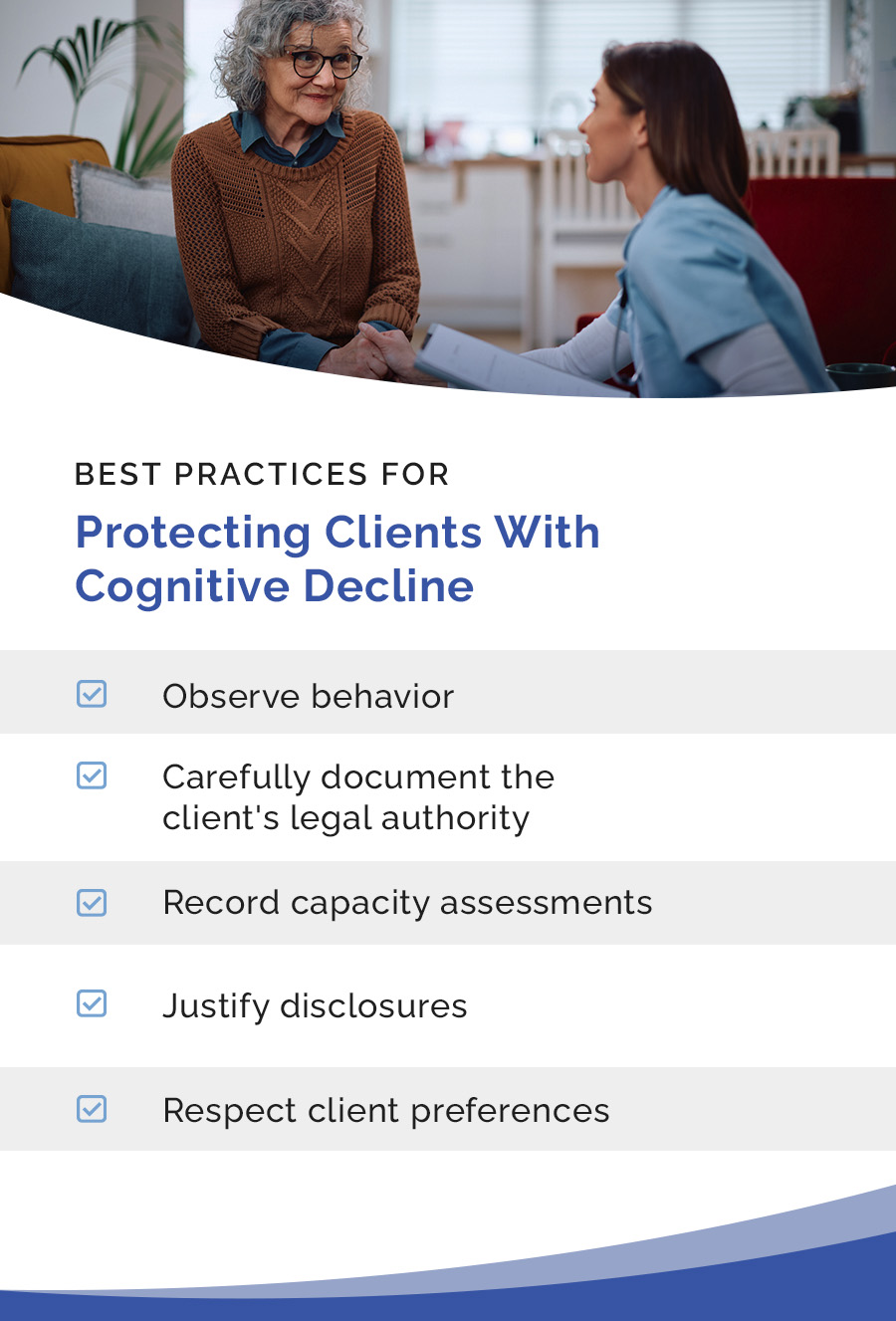
- Observe behavior: Use objective, factual language to document any observations of cognitive decline, safety risks or fluctuating lucidity. In some cases, a family may need to seek a diagnosis and make decisions when their loved one shows early signs of cognitive decline.
- Carefully document the client’s legal authority: Keep copies of legal documents regarding each client’s legal authority in the client’s secure file.
- Record capacity assessments: Note any formal assessments of the client’s cognitive capacity in their care plan.
- Justify disclosures: When you make disclosures due to safety concerns, clearly document why the disclosure is necessary. It’s important to note the information you share, with whom you share it and the specific safety risk the information addresses.
- Respect client preferences: Document the client’s wishes regarding their privacy, and respect their wishes as much as possible within the constraints of their safety and current cognitive capacity.
Does HIPAA Apply to Family Members?
Family members who act as caregivers are not subject to penalties under HIPAA because they are not considered covered entities. However, HIPAA requires family members to obtain written authorization from the patient to view and use their health information. If you care for a family member and need to access their health information, they must sign an authorization that grants permission for you to be involved in their care.
Implied consent also grants access to health information. Health care providers can assume it’s safe to share information with a family member if they are present during a visit and the patient does not object.
Creating a Culture of Privacy
Village Caregiving trains each caregiver on HIPAA compliance, enforcing policies and implementing procedures to protect client information. We implement strict policies and procedures to protect client information, regularly auditing and assessing our processes to support ongoing compliance.
If you are a caregiver for a family member in need of respite care, you can trust our caregivers to care for your loved one while protecting their personal health information.
Learn More About HIPAA for Caregivers
-
Following HIPAA regulations and protecting private health information is vital when caring for seniors. Village Caregiving supports clients and caregivers in maintaining privacy through strict policies and procedures. Our trusted family caregivers provide in-home care and respite care tailored to each client’s needs, taking extra care to honor their privacy. If you are interested in joining our community of family caregivers, explore our career openings.
You can also contact us to learn more about our ethics, code of conduct and privacy policies, or request respite services for a loved one.
Recent Comments