
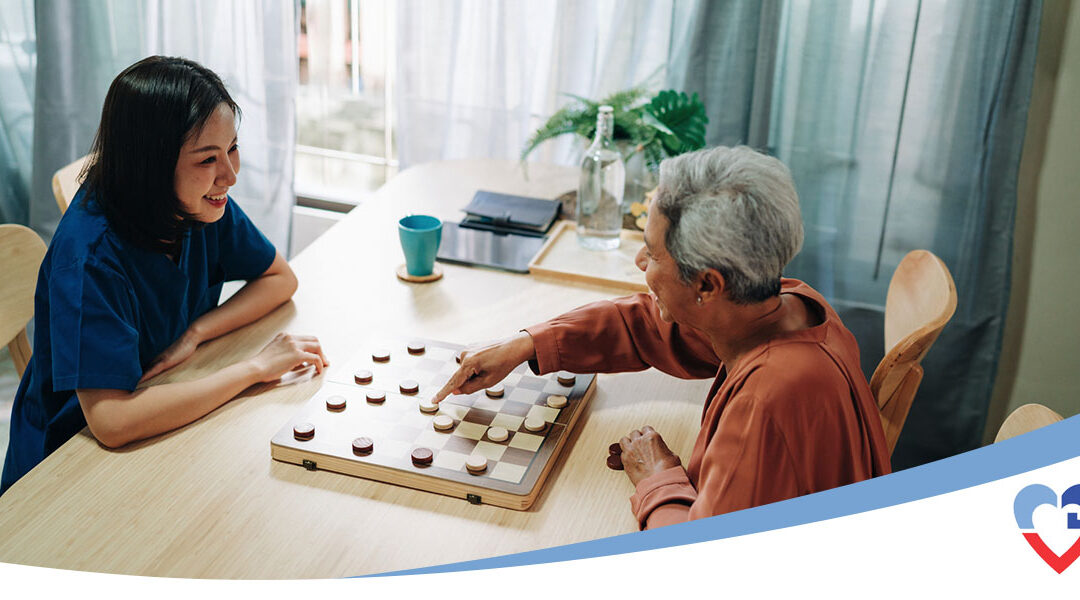
Although loneliness happens to people at any age, seniors experience loneliness at greater levels. Approximately 37% of United States adults between the ages of 50 and 80 have felt lonely and 34% reported feeling socially isolated. Introducing a companion as a trustworthy person to talk about everything from small, mundane matters to mental well-being can have a significant emotional impact.
This guide outlines the benefits of companionship care, its impact on improving mental health in seniors and the advantages for family caregivers.
What Is Elderly Companionship Care?
For seniors experiencing feelings of isolation and loneliness, companionship care offers emotional support and company to these individuals. Whether your loved one lives a considerable distance away from you, has recently lost a partner or experiences mobility issues, companionship care supports your loved one day-to-day.
Mental health is as important as physical health for enjoying a good quality of life. Companionship care enables seniors to pursue their interests and fosters a connection to the broader world.
5 Key Senior Companionship Benefits
With the world moving at a rapid pace and our over-reliance on technology, it can be challenging to prioritize time for visiting elderly loved ones. For seniors, having a companion to share their thoughts with makes a significant difference to their well-being. Here are the benefits of companionship care:
Regular Socializing
Companionship care for the elderly helps seniors develop and maintain social skills. Socializing is especially beneficial for seniors living independently and away from their families. A lack of socializing leaves people feeling vulnerable and lonely. A family caregiver introduces regular social interactions and helps loved ones build new social relationships with other seniors.
Better Physical Health
Aside from emotional support, companionship care also benefits your loved one’s physical health. Loneliness and isolation can influence conditions such as heart disease, weakened immune function, high blood pressure and obesity. Emotional pain and physical pain both stimulate the same stress responses in the body. Over time, it can cause reduced immunity and chronic inflammation.
Feelings of Safety
Having a family caregiver visit your loved one regularly helps them feel safe and secure, reducing the risk of falls or other accidents. A companion offers assistance and support with tasks such as cooking, helping with laundry or picking up items off the floor. Family caregivers can also make your loved one’s home safer by minimizing safety risks.
Reduces Anxiety
Building new friendships or maintaining existing relationships when you live with accessibility issues can heighten anxiety levels. Even leaving the house to buy everyday essentials can be mentally challenging. With companionship care, seniors can feel more comfortable having the support of a family caregiver and can find enjoyment in activities.
Mind Stimulation
Conversations with a companion can help stimulate your loved one’s brain. Alongside frequent conversations, activities such as board games, crossword puzzles, music therapy and practicing art can also stimulate the brain. Mental stimulation contributes to a healthy lifestyle, helps improve memory and boosts cognitive functioning in dementia patients.
What Is the Emotional Impact of Senior Companionship?
Companionship care is more than just spending a couple of hours with your loved one playing a board game. A companion offers seniors a chance to regain their joy and feel a sense of belonging. Explore the emotional benefits of senior companionship:
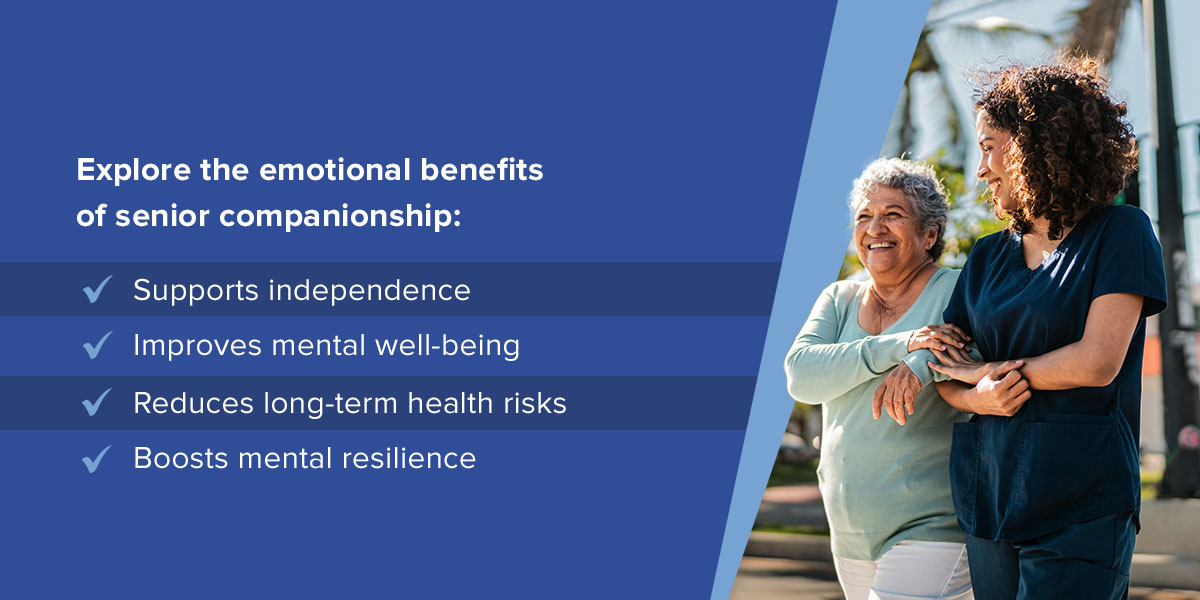
- Supports independence: By introducing companionship care to minimize loneliness, seniors are better equipped to handle tasks such as cooking or getting dressed. Increasing independence means a lower likelihood of needing to move into a nursing home.
- Improves mental well-being: Having frequent contact with meaningful connections and family caregivers tackles the symptoms of depression and feelings of loneliness. Research indicates depression also has links to physical issues, such as sleep problems, stroke and even cancer.
- Reduces long-term health risks: Increasing social interactions with seniors limits the risk of mortality and developing illnesses such as dementia. In comparison to seniors who experience long-term isolation, individuals with frequent social interactions tend to have healthier lifestyles.
- Boosts mental resilience: Regular support from companions ensures that your loved one can cope better with stress and emotional pressures. For example, feeling less isolated and increasing social support helps seniors deal with chronic illness.
Benefits of Companion Care for Family Caregivers
As a family caregiver, knowing your loved one has a regular companion to share activities and conversations with is a comfort. Especially when our busy lives pull us in different directions, a family caregiver fills the void and builds a meaningful relationship. The following are the advantages for family caregivers to consider:
Peace of Mind
Having the peace of mind knowing your loved one has the emotional support of an experienced family caregiver is reassuring. The thought of your loved one being alone while you are miles away or busy working is a crushing thought. However, a companion takes away your stress by forming meaningful bonds, participating in fun activities, becoming a confidant and helping out with day-to-day tasks.
Minimizes Safety Concerns
Tasks such as using the oven to cook a meal or getting dressed in the morning may seem like simple daily occurrences. But everyday tasks and chores can become a safety concern for some seniors. Having a reliable family caregiver to ensure your loved one is not putting themselves in danger is a relief — especially if you are unable to visit regularly.
Boosts Family Relationships
When you can visit, spend your quality time getting to know about your loved one’s experience with their companion. You will likely notice a positive change in their overall mood and your visits will become less focused on offering help with chores. Companionship care serves as a support for both your loved one and your mind.
Tips for Finding the Best Companionship Solution
Selecting the best family caregiver is a considerable task. Understanding the key questions and discussion points to go through will steer you in the right direction:
- Discuss experience and training: Learn about their experience with other seniors and their training. Knowing your loved one is building relationships with trustworthy people is essential for your peace of mind.
- Be clear about companion services: Understand the responsibilities of a family caregiver, including what they can and cannot assist with, such as organizing medication and providing personal care.
- Learn about communication: Ensure you understand how a family caregiver keeps you posted on your loved one’s health and progress.
- Check their safety knowledge: To limit safety concerns, be sure to check that they have the knowledge and tools to help in emergencies.
- Discuss scheduling: Have a conversation about the frequency of visits. It is also worth checking whether the same person or different people will be visiting.
Discover the Emotional Benefits of Companionship Care

Self-isolation and loneliness can have detrimental effects on mental health. Companionship care offers your loved one the opportunity to enjoy a fulfilling lifestyle and gain confidence in themselves. Personalized interactions with our family caregivers foster meaningful bonds that provide emotional and social support, ultimately enhancing overall well-being.
Our friendly, professional family caregivers at Village Caregiving offer a welcoming face and an empathetic ear for your loved one. Mental well-being is just as important as physical health in leading a positive lifestyle. Seniors have the independence to choose activities with their companions, including baking, gardening, art and music therapy.
Ready to learn more about our companion care services? Contact the team today and discover how we can help your loved one.
Recent Comments