

About 60% of seniors say they prefer to remain at home and maintain their independence for as long as possible. But paying for in-home help can feel overwhelming when Medicare coverage rules are inconsistent and costs keep rising.
Medicare funds specific home health care services ordered by a physician, but the benefit remains limited and short-term because the program does not provide long-term assistance. This guide offers a plain-language explanation of Medicare home health rules, a practical eligibility checklist and a state-by-state resource overview.
Medicare and Home Care Coverage
Many families begin researching whether Medicare covers in-home care for a parent or spouse during stressful transitions. While Medicare pays for some services delivered in a patient’s residence, these benefits only apply under defined medical conditions.
The program offsets the cost of a medically necessary, part-time or intermittent skilled home health services ordered by a physician and delivered through a Medicare-certified agency. Approval depends on meeting federal eligibility standards rather than age, family strain or a preference for home care. Ongoing assistance with bathing, dressing, meal preparation, chores and medication reminders does not qualify for Medicare home health coverage.
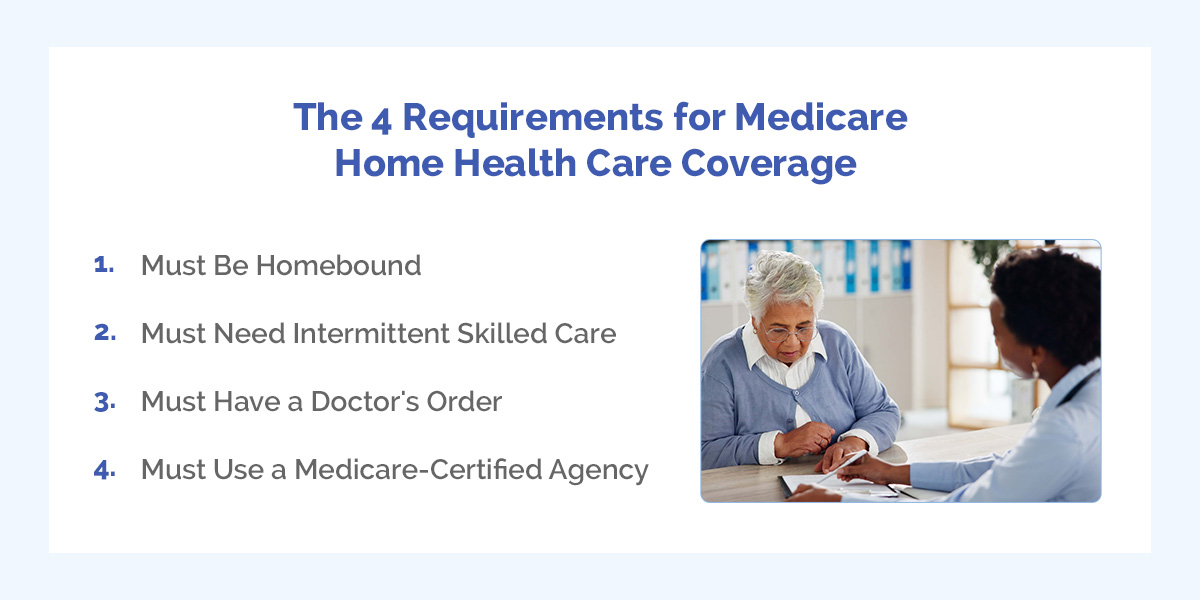
The 4 Requirements for Medicare Home Health Care Coverage
Medicare home health eligibility requires people to meet four federal conditions simultaneously, as described in detail below. Missing even one condition is disqualifying, regardless of need or location.
The federal standards apply in every state. Each rule limits coverage to medically necessary, intermittent skilled services and closely related support, not broad, long-term general assistance at home.
1. Must Be Homebound
Your loved one must meet the federal definition of homebound status to qualify for Medicare home health. The standard does not consider preference. Instead, it focuses on documented functional limits that make leaving home challenging and possibly unsafe.
- Substantial effort: Leaving the home may take significant physical exertion, hands-on assistance or mobility devices, such as a walker.
- Measurable limitations: Traveling even short distances results in noticeable fatigue, balance concerns or shortness of breath.
- Restricted outings: Primary reasons for leaving home are practical instead of social, including medical appointments and occasional essential needs.
- Clinical verification: Fulfilling this requirement involves observation from a licensed provider, who documents mobility challenges and related safety considerations.
2. Must Need Intermittent Skilled Care
To qualify for coverage, your senior loved one must need intermittent skilled care per a provider-approved schedule tied to a diagnosed condition. General assistance does not meet this standard. The requirement applies to services that need licensed clinical judgment rather than nonmedical support.
- Skilled services: Care requires professional attention, such as postsurgical wound treatment or therapist-directed rehabilitation.
- Scheduled visits: Part-time care occurs under a formal plan, instead of continuous presence in the residence.
- Medical necessity: Care must address recovery needs, such as post-stroke therapy or complex medical management.
3. Must Have a Doctor’s Order
Home health services cannot begin without a qualified provider’s formal order. A clinician will complete a face-to-face evaluation linked directly to the senior’s diagnosed condition before authorizing treatment. The written order must clearly connect the documented medical findings to the specific skilled services needed in the home. The complete evaluation process is as follows.
- Clinical assessment: A physician or authorized practitioner must examine the senior and record their findings to justify skilled intervention.
- Written plan: The provider must create a care plan outlining specific services, visit frequency, projected duration and measurable treatment outcomes.
- Ongoing review: The provider must reassess the plan at specific intervals to confirm that continued medical care is still necessary.
- Accurate documentation: The provider must submit complete paperwork by a deadline to maintain coverage.
4. Must Use a Medicare-Certified Agency
Medicare coverage applies only when a federally certified agency provides home health services. To maintain Medicare home health eligibility, the agency must remain officially approved by Medicare and be active and compliant while delivering care. Meeting this requirement necessitates several steps.
- Agency certification: The home provider must hold an active federal certification and comply with all the criteria.
- Valid provider order: A qualified clinician must issue a formal order after evaluating the patient and confirming the condition that needs skilled care.
- Written care plan: The ordering clinician will establish a formal plan that shows the approved services, visit frequency and estimated duration of care.
- Plan review: The provider must reassess and recertify the plan within the federal timelines to maintain coverage.
A Resource Guide to Medicare Home Health Coverage by State
Federal rules govern Medicare home care coverage nationwide. Local access varies depending on how many certified agencies operate in your area and whether state programs offer in-home support options. The chart below lists state contacts and resources to help you compare what is available in your area.
How to Handle Denials
Medicare sometimes denies even well-documented cases. Decisions often depend on how thoroughly the records describe the person’s homebound status, the skilled need and the care plan, rather than the diagnosis. Understanding the potential reasons for denial can help your family respond quickly and prepare more conclusive documentation for the next review.

Top Reasons for Denial
Minor wording differences in the medical record can influence how reviewers see your senior loved one’s eligibility. Careful, detailed charting may prevent avoidable delays. Here’s why Medicare applications get denied.
- Homebound status: A reviewer who observes nonessential outings or independent mobility may determine that the patient is not fully homebound.
- Custodial framing: Medicare might deny claims when reviewers document personal assistance or maintenance instead of defined, skilled interventions with measurable goals.
- Incomplete records: Coverage may end if the necessary documents, such as evaluations or care plans, are missing, unsigned or submitted late.
- Long-term pattern: Reviewers can question episodes that seem more like ongoing full-time support than intermittent skilled care.
- Uncertified agency: Medicare may deny claims when an agency offers or delivers services without proper certification or authorization for a treatment plan.
Your Appeal Rights
You have the right to challenge a denial or an early termination through a formal appeal process, which includes a written notice explaining the reasons for the decision.
- Record access: Request copies of the clinical notes and care plans to review the information used by decision-makers.
- Provider support: The ordering provider or agency must submit clarifying statements or updated assessments when additional documentation strengthens the case.
- Counseling help: Neutral counseling programs or legal aid groups can explain your rights and help you track the necessary deadlines.
Coverage Duration
Each episode of Medicare home health coverage takes place over a defined period linked to the ongoing need for care. The services only continue if there is a reasonable expectation that skilled care will help improve the senior’s condition, maintain their current function or stop them from declining. The frequency of visits may decrease as the senior’s recovery progresses or their symptoms stabilize under their plan.
- Certification period: The team must document the continued need for skilled care within each authorized time frame.
- Skilled expectation: The provider must confirm that the services remain reasonable and medically necessary.
- Visit adjustment: The team must adapt the visit frequency based on clinical progress or stabilization.
- Discharge criteria: The provider will end the service once measurable goals occur or are no longer achievable.
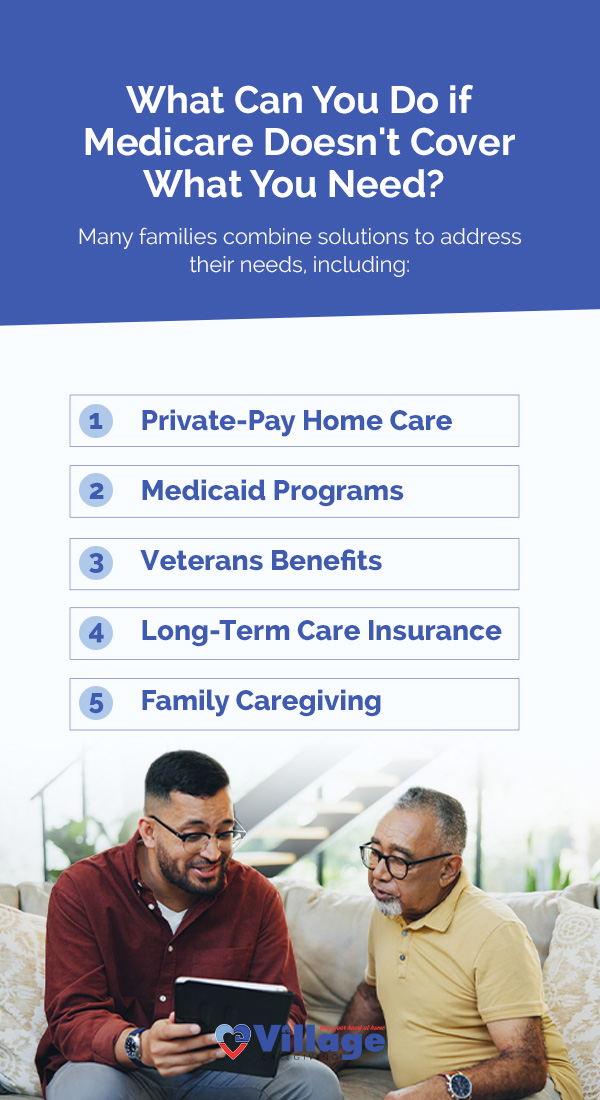
What Can You Do if Medicare Doesn’t Cover What You Need?
There’s often a gap between what Medicare funds and daily living activities. For instance, standby help with walking, ongoing housekeeping, meal preparation and dementia support extends beyond the scope of skilled services delivered under home health plans.
Many families combine solutions to address their needs, including private pay, Medicaid waivers, community programs and flexible in-home care. Revisit the plan regularly as your loved one’s health status, your finances and family availability change.
1. Private-Pay Home Care
Private-pay services allow you to purchase in-home support directly from an agency or individual caregiver. Contracts outline their duties and schedules. You can tailor assistance to specific times or scenarios, such as mornings for helping seniors get bathed and dressed, or evenings when confusion and worry tend to worsen.
Flexibility is the primary advantage of this kind of care. Some agencies specialize in dementia care or complex behavioral support, which can be beneficial when safety concerns are part of the plan. Before committing to private-pay care, review the agency’s rates, minimum-hour policies and backup staffing protocols so your expectations stay realistic.
2. Medicaid Programs
Medicaid programs can fund personal care and support services at home for eligible people. Benefits vary by state. Many states limit weekly service hours and maintain waiting lists or enrollment caps for waiver programs.
Financial eligibility generally includes income and asset thresholds, as well as spousal protection rules that affect resource allocation. The application requires detailed documentation. Because approval can take months, you will benefit from applying early and following up regularly to prevent delays that disrupt your planning.
3. Veterans Benefits
Veterans may qualify for in-home support through the Department of Veterans Affairs. Eligibility depends on service history and medical need. VA health care programs can provide homemaker assistance, home health aide services or skilled home-based primary care for veterans who meet the clinical standards.
Separate pension benefits, including aid and attendance, may add monthly funds that families can apply toward ongoing caregiving costs. Approval criteria vary by program. Accredited veterans service officers can help you interpret the eligibility rules, complete the necessary forms and organize supporting records that will help to influence the final benefits.
4. Long-Term Care Insurance
Long-term care insurance may partially reimburse in-home care expenses that meet specific benefit triggers. The eligibility standards vary by policy. Many contracts require documented difficulty with daily activities or verified cognitive impairment before payments begin. Coverage terms often distinguish between licensed agencies and independent caregivers, which can determine whether your chosen arrangement qualifies for reimbursement.
Some plans include elimination periods that require families to pay out of pocket for a defined number of days before the benefits activate. Contact the insurer to review documentation and clarify terms before committing to services.
5. Family Caregiving
Family members often carry the bulk of caregiving responsibilities. Relatives may manage medications, coordinate appointments, monitor safety and provide daily supervision while also offering emotional reassurance.
But the workload can grow quietly. Hidden costs might include reduced work hours, missed career opportunities, personal health strain and tension within relationships that did not originally revolve around sustained caregiving demands.
Families benefit from sticking to boundaries, setting schedules and outlining backup plans. Planned respite through community programs, short-term stays or paid in-home support for a short period allows family caregivers to rest and return with renewed focus.

How Village Caregiving Can Help
Medicare home health coverage has technical limitations that can quickly become confusing. Many families discover too late that ongoing daily personal care falls outside Medicare’s narrow rules. That gap can leave seniors feeling vulnerable and their caregivers feeling overwhelmed.
Village Caregiving provides reliable, flexible in-home support that fills the space Medicare doesn’t cover. Whether you need help a few hours a week or consistent daily attention, our team delivers personalized services designed to keep your loved one safe and comfortable at home.
Contact us to discuss care options today.
Recent Comments